
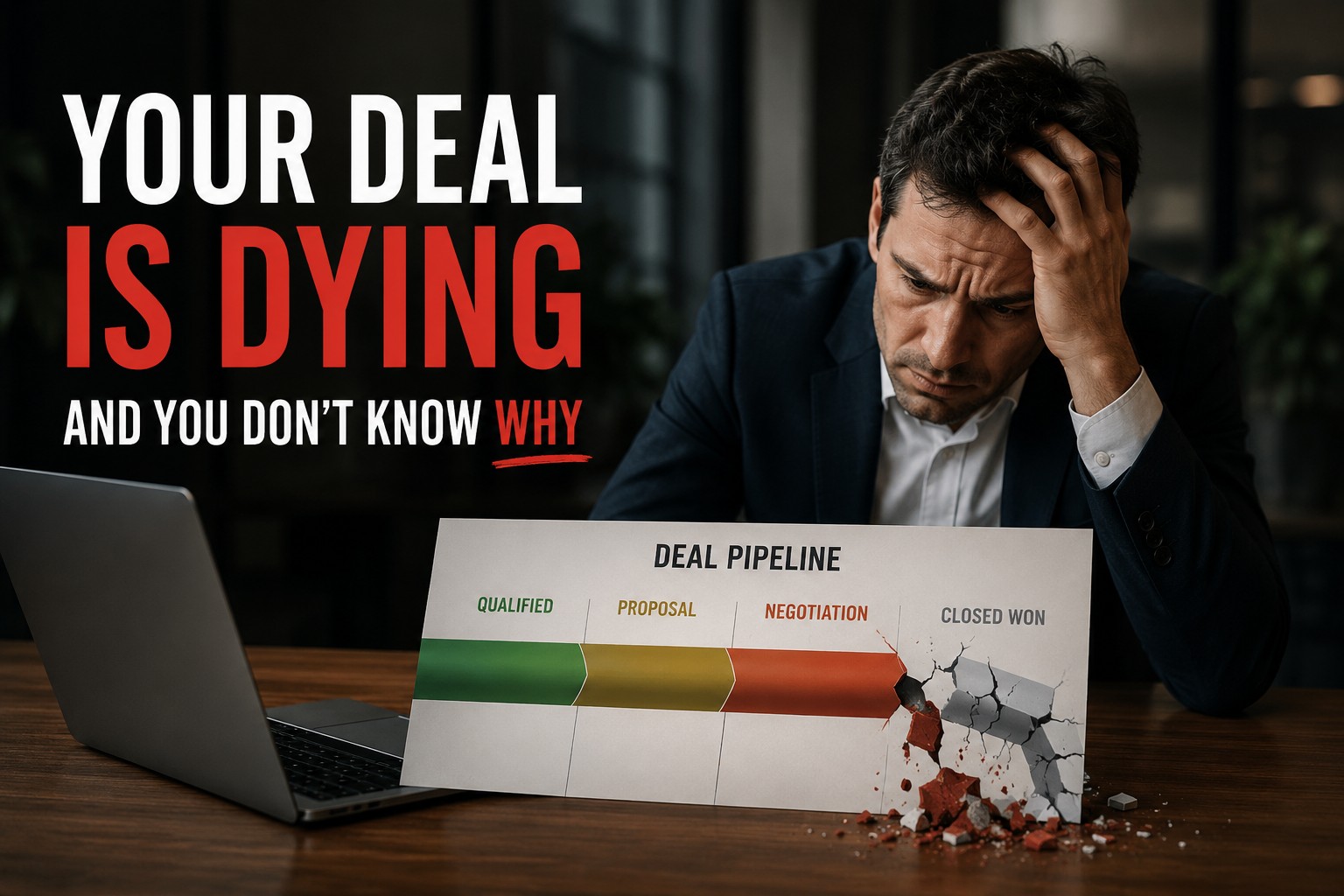
Many financing deals start dying long before a bank says no. Inside the lender, your file quietly loses priority because structure, documentation, or lender fit are weak, not because the business itself is broken. That is why financing deals fail before anyone sends a decline email.
You still see the term sheet in your inbox, but the underwriter has stopped asking questions. Replies that once came the same day now take a week. The deal looks alive on paper, yet the process feels like it is slowing to a crawl.
Most transactions never reach mortgage approval issues at closing or a dramatic committee rejection. They fade out earlier because the file is not lender ready, the wrong capital source saw it first, or key risks stayed unanswered. We walk through how to diagnose that pattern and what can still be adjusted.
Think of this as a deal autopsy before it is too late. Use it as a checklist while a financing deal is stalled but not yet lost. The next sections cover warning signs, root causes, and ways to protect both the current transaction and your long‑term borrowing record.
Key Takeaways
Capital markets can feel opaque when a lender goes quiet. This summary highlights the main ideas we see across commercial real estate, corporate, and acquisition mandates. Each point reflects patterns we observe daily at Equis Capital Finance. Keep them close as you compare them with your active transactions.
- Lender silence often signals that the file has lost internal momentum rather than a simple pause for review. When questions stop and timelines stretch, the credit team may already have moved on to clearer, better prepared mandates. Treat slow, vague replies as signs your deal is falling through, not as neutral waiting time.
- Structural gaps and documentation weaknesses are the most common deal killers in financing. Thin equity, unclear use of funds, unsupported projections, or missing third‑party reports push credit officers toward safer files. According to Statistics Canada, roughly one in five SMEs that sought external financing were turned down or only partially approved, and weak packaging is a major reason.
- A strong asset or project alone is not enough. A good building or business rarely secures funding at banks like RBC or TD Bank on its own. Lenders also assess sponsor record, repayment logic, mitigants, and how the numbers behave under stress. Solid businesses still see a business loan declined when the transaction itself is not lender ready.
- Capital readiness means the deal has been reviewed the way an institutional underwriter at a major bank would review it. Projections, security, and capital stack all line up with lender policy before anyone sends the file to a capital source. That preparation sharply improves the odds of approval and clean closing.
- Early deal review protects your name. Early work on structure and documentation protects both the transaction and the sponsor’s reputation in Canada’s small investment community. When Equis Capital Finance runs a Project Navigator™ review first, we can fix issues before lenders like BDC or private debt funds see them. That keeps your name associated with well‑prepared, realistic transactions instead of repeat failed files.
Why Financing Deals Fail Before Anyone Says No
Financing deals fail before anyone says no when the transaction is not lender ready, even if the underlying project appears sound. Inside banks and private funds, weak structure and unclear risk can push a file to the bottom of the pile long before a formal decline goes out.
From our vantage point at Equis Capital Finance, the key pattern is simple. Credit officers at institutions such as Scotiabank, CIBC, or a private credit fund handle many competing requests at once. Files that answer their questions cleanly move forward. Files that raise basic questions about leverage, cash flow, or sponsor discipline quietly lose priority.
Borrowers often interpret silence as “still under review.” In reality, the underwriter may already have decided that the capital stack is too aggressive or the projections look optimistic. Instead of writing a detailed decline, they move their time to clearer mandates. The deal is effectively dying while the borrower believes it is only slow.
Early warning signs appear well before a loan denial after pre approval or a hard no from a committee:
- Replies shift from specific questions to vague comments like “we are still looking at it.”
- The lender asks for the same basic documents more than once.
- No one outlines next steps or an internal timeline.
Tip: Keep a simple log of every lender interaction—questions asked, documents sent, and promised timelines. If that log shows more chasing than clear progress, treat it as a sign the file is stalling.
These patterns apply across real estate financing problems, project financing challenges, and acquisition financing problems. Whether the transaction sits with a credit union in Calgary or a New York debt fund, the quiet loss of priority usually has the same roots. The file is messy, the structure feels stretched, or the lender never fit the mandate in the first place.
When we review a financing deal stalled in this way, our first task is to read it the way a credit committee would. That lens often explains the silence much faster than another round of hopeful follow‑up emails.
The Most Common Reasons Financing Transactions Collapse

Financing transactions collapse most often because structure, documentation, and sponsor story do not meet institutional standards. The business might be solid, yet the way the file presents risk gives underwriters too many reasons to step back.
According to Statistics Canada, about one in five Canadian SMEs that sought external financing reported being turned down or only partially approved — a pattern consistent with broader research on Investment Portfolio Allocation and institutional risk tolerance across lending groups. In our experience, many of those outcomes trace back to incomplete packages, unclear repayment plans, or capital stacks that never matched lender policy.
Here is where problems usually start:
- Weak structure creates many commercial financing problems long before anyone says no. Common issues include thin equity, unrealistic loan‑to‑value targets, or heavy reliance on one senior lender with no backup plan. When financing conditions are not met on a conditional commitment, the deal often collapses because the structure never made sense for that institution.
- Documentation gaps quickly erode lender confidence and feed financing approval problems. Outdated financial statements, inconsistencies between tax filings and management numbers, or missing rent rolls for a multi‑family building all raise red flags. Credit teams at institutions like National Bank or CMHC will often slow communication rather than fight through an incomplete package.
- Unsupported projections are another common reason why business deals fall through. Borrowers assume aggressive revenue growth without tying it to signed leases, firm contracts, or market data. Underwriters cannot rely on that story when testing debt service coverage. The result is a quiet deal collapse due to financing, even though the base business could have supported a more modest structure.
- External risks around permits, zoning, or construction can turn into last‑minute financing issues. If a lender discovers unresolved environmental concerns or building approvals late in the process, credit appetite shrinks fast. That is when sponsors see a deal falling through at the financing stage even after months of work and apparent lender interest.
Why Approaching the Wrong Lender Makes a Good Deal Look Bad

Approaching the wrong lender makes a good deal look bad because the mandate never fits that institution’s risk, sector, or cheque size. The file then drifts inside the wrong shop, gains a quiet “no,” and may gain a reputation before it ever reaches the right capital source.
Not every lender in Canada works on every type of transaction — academic analysis of Diversification strategies for indirect real estate investment confirms that capital source alignment is critical to deal success across mixed-use and institutional mandates. A $40 million mixed‑use development that fits an insurance company like Manulife or a pension fund will not fit a credit union that tops out at $5 million. Presenting that deal to the smaller lender wastes time and makes the structure appear unrealistic.
Canada’s investment community is relatively small. Commercial teams at RBC, TD Bank, BMO, and private lenders speak with one another, as do members of the Canadian Bankers Association. When a file arrives on many desks in quick succession with the same weak positioning, it starts to sound like a shopped deal. Lenders then assume that others have already passed for good reasons.
Many brokers confuse access to lenders with access to capital. They blast the same package to dozens of contacts rather than matching a middle‑market financing request to the few desks that truly fit it. At Equis Capital Finance, we see strong real estate and corporate mandates hurt in this way long before anyone offers a fair review.
How Deal Reputation Damage Compounds Over Time

Deal reputation damage compounds over time because lenders track sponsors as much as they track assets. Each poorly prepared or unrealistic mandate attached to a name shapes how future committees at that bank view the next file from the same sponsor — a pattern well-documented in studies on What could we learn from startup failures, where repeated execution missteps permanently erode institutional trust.
Credit teams at institutions such as HSBC Canada, Desjardins, or an alternative debt fund keep internal notes. When they see the same borrower arrive with another confusing capital stack or rushed due diligence, they remember the pattern. Even when they approve the next file, they may charge higher pricing or demand tighter covenants to offset execution risk.
Research from Harvard Business Review highlights that trust and track record can influence financing decisions as strongly as raw numbers (source: Harvard Business Review).
That insight matches what we hear from senior lenders and private equity partners. They want to support sponsors who consistently deliver clean, realistic proposals and then close on the agreed terms.
The sunk‑cost trap makes this damage worse. Sponsors invest months of work, legal fees, and appraisals into a fragile structure. When warning signs appear, they keep pushing the same file rather than pause to rebuild it. Each new lender then sees a tired, over‑exposed mandate instead of a refreshed, lender ready transaction.
Another subtle effect appears when a deal faces repeated informal declines. A borrower begins to adjust terms piecemeal to chase a yes, instead of stepping back to fix the design. We often see leverage pushed higher, security weakened, or repayment plans stretched in ways that spook serious lenders. The more this happens, the more the sponsor’s name becomes linked with strained packages.
As Warren Buffett has put it, “You only find out who is swimming naked when the tide goes out.” In financing, a weak pattern of past deals lowers the tide very quickly.
At Equis Capital Finance, part of our role is protecting that longer‑term reputation. We would rather advise a client to pause, repair, and relaunch a financing than send a half‑ready file to every major bank in Toronto and Montréal and lock in a poor first impression.
What Capital Readiness Actually Means — And How We Can Help

Capital readiness means a financing transaction has been reviewed and strengthened before it reaches any lender, the way an institutional underwriter would review it. A capital ready file lines up structure, documentation, and narrative so that credit officers at banks and funds can focus on risk, not on missing pieces.
In practice, that starts with a hard look at the numbers:
- Historical results, rent rolls, and cash flow statements must match tax filings and internal records.
- Projections must tie back to evidence such as signed leases, market studies, or letters of intent.
- The model should be stress‑tested to see whether the debt still works if interest rates rise or lease‑up takes longer than planned.
The capital stack also needs to make sense before any outreach. That includes the right blend of senior debt, mezzanine capital, and equity, with clear security for each tier. According to Statistics Canada, about one in five SMEs seeking financing face a full or partial decline, and misaligned structure sits behind many of those outcomes — a finding reinforced by academic analysis of The Intangible Value of urban real estate projects, which shows that even high-quality assets fail to attract funding when capital structure and lender narrative are not properly aligned. Fixing that inside the file is far easier than explaining it to a credit committee.
At Equis Capital Finance, we operate as a capital markets advisory firm, not as a generalist commercial mortgage broker. Our principals bring more than twenty years of hands‑on principal experience closing commercial real estate, corporate, and acquisition financings across Canada and the United States. That background means we start from the same place a senior underwriter at a chartered bank or institutional fund would start.
Our Project Navigator™ process is the formal expression of that approach. The tool reviews the transaction, maps which lenders or investors truly fit, and outlines a realistic path from proposal to closing before a single file goes out. For a development mandate, we may involve our Construction Finance Group. For a more complex or non‑bankable case, our Private Capital Group can focus on alternative lenders and project equity.
One more point matters here. Equis Capital Finance is not a lender. We arrange, structure, and advise on commercial, corporate, project, real estate, acquisition, and mid‑market financing transactions through suitable capital sources. Our job is to give sponsors a lender ready package and a targeted outreach plan so that solid deals do not fail for avoidable reasons.
The Takeaway: Your Deal May Still Be Salvageable

The central idea is simple. Most financing deals that are drifting, or have been quietly set aside, are failing for identifiable reasons rather than because the project itself is impossible to fund. Structure, documentation, and lender choice can often be repaired if someone looks at the file with an underwriter’s eye.
When a financing deal stalled with one bank or private lender comes to us, we treat it like a diagnostic review. We look for financing red flags in deals that explain why lenders reject deals last minute or pull back after a pre approval. Once those issues are clear, we can discuss whether a rebuilt structure and better matched capital source can restore momentum.
This is also the safest way to protect your name in front of large institutions such as RBC, TD Bank, or major pension funds. One well‑prepared resubmission to the right desks will serve you far better than five more hurried attempts at different lenders. Preventing deal failure at the financing stage is often about discipline rather than volume.
If your commercial mortgage, corporate facility, or acquisition financing has stalled, a confidential review with Equis Capital Finance can help you understand where the file stands. We cannot promise approval, and we will not send a mandate to market before it is ready. What we can do is give you a clear read on whether the deal is salvageable, what must change, and which capital sources still make sense.
Frequently Asked Questions
Question: What are the most common signs that a financing deal is in trouble?
The most common signs are slower replies, vague feedback, and repeated requests for basic documents. When no one at the lender outlines clear next steps or timing, the file has usually lost internal momentum. That pattern often appears well before a formal decline letter.
Question: Can a deal be revived after it has been declined by a lender?
A deal can sometimes be revived if the main issues are structural and fixable. Rebuilding the capital stack, tightening documentation, and approaching a better matched capital source can restore interest. Acting quickly, before the mandate becomes widely known as a failed file, gives the best chance of success.
Question: Why do financing deals fall through even after a pre approval or conditional commitment?
Financing deals fall through after pre approval because conditional offers depend on every condition being met. Common triggers include appraisals that come in low, environmental or zoning issues, changing deal terms, or weaker cash flow than expected. Any of these can cause a lender to reduce or withdraw their commitment.
Question: What does “being shopped” mean and why is it harmful to a financing deal?
Being shopped means a deal has been circulated widely to many lenders without a focused strategy. In Canada’s tight commercial finance community, word travels fast when a mandate has been shown everywhere. Lenders then assume others have already passed, which makes fresh review far less likely.
Question: How is Equis Capital Finance different from a commercial mortgage broker?
Equis Capital Finance acts as a capital markets advisory firm rather than a volume‑driven brokerage. We focus on structure, documentation, and precise lender targeting instead of sending the same package to every contact. Our principals bring institutional transaction experience, so we design files the way credit committees expect to see them.