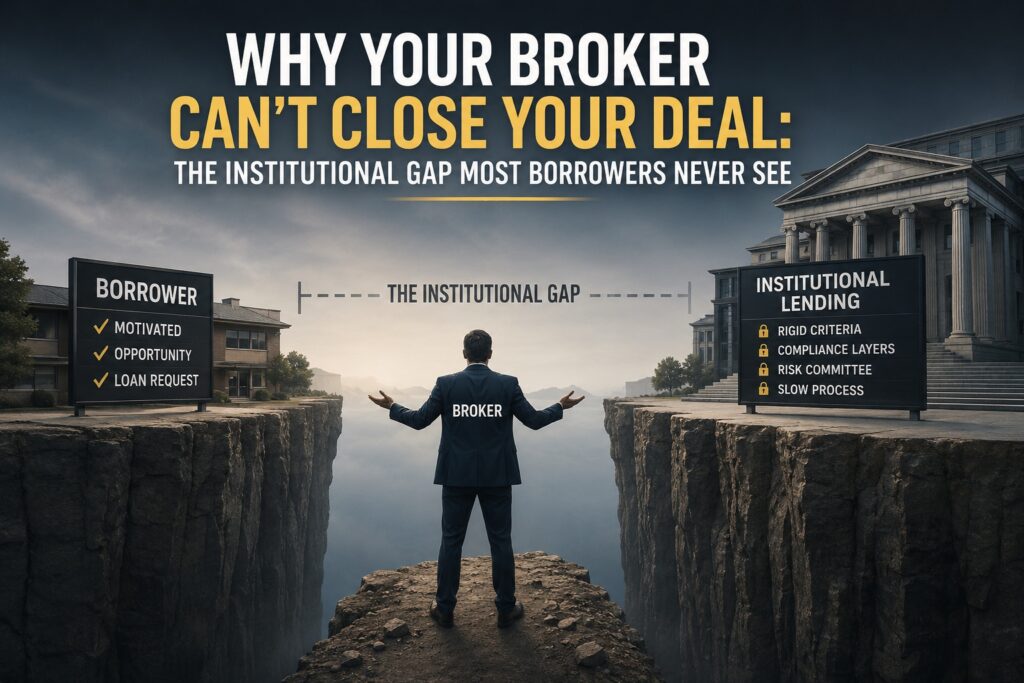

Your project pencils out. Your credit is clean. Your broker sounded confident right up until the lender came back with a decline, or a re-priced term sheet that makes no sense for the deal you pitched. The real culprit is rarely the asset itself. More often, it comes down to how the file was packaged for underwriting, the process every lender runs before saying yes.
Underwriting is the review a lender performs to judge risk before approving, adjusting, or declining a financing request. This article explains how mortgage underwriting and commercial underwriting actually work, why strong projects still get declined, and what a lender-ready package looks like. We will also look at how Equis Capital Finance, a capital markets intermediary with established lender relationships across Canada and the US, helps sponsors fix packaging problems before they cost a deal. Read on to see where most financing requests actually fall apart.
Key Takeaways
- Underwriting judges the quality of your file, not just your personal or business credit score.
- Most commercial loan declines trace back to packaging problems, not weak creditworthiness.
- Capital stack misalignment is the number one structural reason deals fall apart before negotiation even starts.
- Institutional-grade documentation and a clear written narrative change your approval odds significantly.
- Strategic, sequenced lender matching works better than shopping a deal to every lender who will listen.
What Is Underwriting and Why Does It Decide Your Deal?
Underwriting is the formal risk review a lender runs before deciding whether to approve, modify, or decline your financing request. It is the single gate every deal passes through, no matter how strong the project looks on paper. A mortgage underwriter, a commercial underwriter, or an insurance underwriter all do the same basic job: they study the numbers, check the documentation, and decide if the risk fits their institution’s lending guidelines.
Underwriters look at two things at once:
- The deal itself the income, the collateral, and the repayment source.
- Sponsor discipline whether the person presenting the deal has done the homework a lender expects to see.
A disorganized submission raises doubt even when the underlying numbers are solid, because underwriters assume a sloppy file often hides a sloppy sponsor. That assumption shapes every underwriting requirements checklist a lender applies to a file. Understanding this dual focus is the first step toward building a package that actually earns approval instead of a decline letter.
How Mortgage and Commercial Underwriters Evaluate Risk
Lender underwriting guidelines focus on debt service ratios, loan-to-value, credit history, cash flow, and collateral quality. Residential mortgage underwriting leans on income and the debt-to-income ratio underwriting teams use to judge repayment capacity, while commercial underwriting adds debt service coverage and management track record. A file that gets 90% of these elements right can still read as fully risky if the missing piece sits exactly where a lender expects the most clarity.
Why Do Strong Projects Still Get Declined?
Strong projects get declined for structural reasons that have little to do with whether the business or property can actually support the debt. The deal itself may be sound, but the way it reaches the lender’s desk determines whether an underwriter can say yes with confidence. Statistics Canada’s research on small business financing shows that roughly one in five small and medium-sized enterprises seeking external financing are turned down or only partially approved, and a meaningful share of those outcomes trace back to how the request was packaged, not whether the business could service the loan.
Underwriters cannot approve what they cannot verify, and risk reporting practices that fail to reconcile appetite with actual exposure, as seen in broader financial services failures, show why institutions penalize incomplete or inconsistent files rather than reconstructing a case the sponsor should have built from the start. Weak packaging does more than slow the loan approval process down, it signals poor sponsor discipline, and underwriters penalize that signal regardless of how attractive the underlying asset looks. A property with excellent fundamentals attached to a disorganized submission still reads as a weak file, because the underwriter has no reliable way to separate a genuinely risky deal from a merely poorly presented one.
The practical result is a stalled file, a term sheet re-priced upward, or deals get declined with no clear explanation. Four structural problems account for most of these outcomes, and each one is preventable once a sponsor understands what institutional lenders actually need to see.
Incomplete Financing Packages

Missing financial statements, inconsistent rent rolls, and vague use-of-funds explanations are the most common reasons a file stalls in underwriting. When numbers in one document don’t match another, the underwriter has to stop and question everything else in the package. A disordered file reads as an unprepared sponsor, even when the project itself has real merit.
Capital Stack Misalignment

A mismatched mismatched capital stack is the most common structural killer in commercial underwriting. Lenders will not redesign your debt-to-equity split or loan-to-cost ratio to fit their policy; that work has to happen before submission. If the debt service coverage ratio or loan-to-cost sits outside a realistic institutional capital advisory, the deal is dead before anyone negotiates terms.
Missing Institutional Language in the Narrative

Enthusiasm and a polished pitch deck don’t replace a written, credit-committee-ready case. When assumptions live only inside a spreadsheet formula instead of being stated in plain writing, underwriters are left guessing at the sponsor’s logic. Credit committees expect documented risk disclosure, not marketing slides, and this cost of weak structuring deal early.
Wrong Lender Selection and Sequencing

Sending a complex deal to a fast hard money lender without a planned exit turns a bridge into a trap. shop deals vs structure to a dozen mismatched lenders multiplies declines rather than approvals. Those declines follow the sponsor too, since lenders talk to each other, and repeated rejections start to look like a reputational blacklist.
What Does a Lender-Ready Package Actually Include?

A lender ready package is a financing submission built to institutional standards before it ever reaches an underwriter’s desk, not patched together after the first round of questions. Getting here means treating documentation and capital stack design as one connected problem, not two separate tasks handled at different stages.
Institutional lenders are not looking for perfection; they are looking for a file that answers the obvious questions before anyone has to ask them. That means verified numbers matching across every document, a funding structure that already fits realistic underwriting guidelines, and a narrative that explains risk honestly instead of glossing over it. Sponsors who build this way move through the mortgage underwriting process and commercial underwriting process faster, because the underwriter spends less time chasing clarifications. The checklist below covers the core elements worth confirming before your next submission goes out the door.
Documentation and Capital Stack Checklist
Before any file leaves your hands, confirm it covers the documentation and structuring points underwriters check first. These apply whether you are seeking a commercial mortgage, a construction facility, or working capital solutions for a mid-market business.
- Three years of reviewed financial statements, along with personal and business credit history, give underwriters a verifiable track record instead of a snapshot.
- Rent rolls and pro formas need assumptions spelled out in writing, not buried inside spreadsheet formulas nobody outside the file can follow.
- Clear use-of-funds documentation tells the lender exactly where the money goes and why that allocation makes sense.
- A capital stack sized to fit lender policy without requiring modification shows the sponsor already understands the mandate.
- Risk disclosure and downside scenario analysis show the sponsor has thought through what happens if performance falls short of plan.
How Equis Capital Finance Fixes Weak Deal Packaging
Equis Capital Finance fixes weak deal packaging by operating as a capital markets intermediary rather than a direct lender, which puts the entire focus on structuring the deal correctly the first time. For over 20 years, the firm’s principals have originated, negotiated, and closed commercial financings from $1 million to $500 million across Canada and the United States, spanning multi-family residential, mixed-use, office, retail, industrial, and mid-market corporate transactions.
The core distinction is structuring versus shopping. Where a retail broker sends one file to a dozen lenders and measures success by how many responses come back, Equis sizes the capital stack first. The team builds documentation to institutional standards before any lender sees the file, then matches the deal to a short list of lenders whose mandates actually fit. This treats debt-to-income ratio underwriting thresholds, loan-to-value limits, and debt service coverage requirements as design inputs, not afterthoughts to negotiate around later. The goal is fewer declines and faster conditional approval outcomes, because the lender receiving the file already recognizes it as complete.
The Project Navigator™ Approach
The Project Navigator process process starts with a full transaction review and, where needed, a capital stack rebuild before a single document goes to a lender. This includes stress-testing financial projections and preparing institutional-grade information memoranda that translate a sponsor’s vision into the language a credit committee actually uses to evaluate risk.
From there, the firm draws on a lender network built over more than two decades across Canada and the US to sequence submissions toward institutions most likely to say yes. Specialized groups, including the construction financing deals and the Private Capital Group, step in for complex or non-bankable deals that fall outside conventional underwriting guidelines.
Moving Forward
Weak credit rarely sinks a commercial financing request; weak packaging does. The deals that stall, get re-priced, or come back declined usually share the same root cause: a file that didn’t give the underwriter what was needed to say yes with confidence.
Fixing this before you approach a lender changes the entire conversation. Working with a structuring partner like Equis Capital Finance, rather than mailing the same file to every lender willing to take a look, turns a guessing game into a managed process with a realistic path to closing. If your broker couldn’t explain the last decline, the file is the place to start looking.
Frequently Asked Questions
What Is the Difference Between Manual Underwriting and an Automated Underwriting System?
Manual underwriting means a human underwriter reviews the full file personally, weighing exceptions an algorithm can’t judge. An automated underwriting system pre-screens applications using algorithms and digital verification, which speeds up simple files. Complex commercial deals almost always still need manual, principal-level review before approval.
How Long Does Commercial Loan Underwriting Typically Take in Canada?
Commercial loan underwriting in Canada typically takes 30 to 60 days or more, depending on the complexity of the business and the completeness of the file. Well-packaged submissions with organized documentation move through due diligence faster than files needing repeated follow-up requests.
What Does Conditional Approval Mean in the Mortgage Underwriting Process?
Conditional approval means the lender will fund the deal once specific items are satisfied, such as additional documents, a debt paydown, or a larger deposit. It is not a rejection. It simply means a few remaining gaps need to close before the file is finalized.
Why Do Lenders Reject Deals Even When the Business Is Profitable?
Profitability alone doesn’t offset a disorganized or incomplete file, because underwriters read packaging quality as a direct signal of sponsor discipline. A strong, profitable business attached to a sloppy submission still reads as risky, since the underwriter can’t separate presentation problems from genuine financial weakness.
What Is the Role of Debt-to-Income Ratio in Underwriting Requirements?
Debt-to-income ratio, or its commercial equivalent the debt service coverage ratio, measures the ability to service debt from income or cash flow. Most commercial lenders require a minimum DSCR around 1.25 to 1.50. Ratios sitting outside that mandate stall approval regardless of other strengths in the file.