
Why Readiness Comes Before Lender Outreach
The most common mistake in commercial financing is approaching lenders before the file is ready. A lender who receives an incomplete package, or one whose figures contradict each other, forms an impression that is hard to undo. Knowing how to prepare for a commercial loan comes down to sequencing: define the transaction, test it against the ratios lenders use, assemble the documents, and only then go to market.
Readiness also protects your negotiating position. A sponsor who can answer questions about income, leverage and use of proceeds without hesitation signals discipline, and disciplined files tend to move through underwriting with fewer interruptions. One practical guide recommends gathering and organizing documents at least two to four weeks before a planned submission. That is a fair minimum for a straightforward file, and a tight one for anything involving construction, acquisition or multiple entities.
Lenders also want to understand why the capital is needed. As one step-by-step application guide puts it, lenders do not just want to know that you need funding; they want to know why. A purpose statement that ties the use of proceeds to a repayment source is the foundation everything else rests on. For most real estate transactions, that source is property income, so the story you tell about the asset has to match the numbers you present.
This is where a confidential capital-readiness diagnostic earns its place. Our Project Navigator™ process tests a transaction’s structure and positioning before any lender sees it, so weaknesses are addressed privately rather than discovered during underwriting.
Financial Documents and Reconciling Your Figures
Underwriters work from documents, so the quality of your package sets the ceiling on how seriously the request is taken. A typical Canadian commercial file includes income statements, balance sheets, a net worth statement and tax returns. Where a property is involved, add an appraisal, purchase agreement, rent rolls and lease agreements, as Citadel Mortgages outlines. Expect to supply two to three years of personal and business tax returns, plus year-to-date profit and loss statements and balance sheets.
The documents are only half the task. The figures must reconcile. Check that the numbers on your tax returns agree with the financial statements you are providing; a gap between the two raises questions about which set is accurate. If a difference is legitimate, whether from a depreciation method, a one-time gain or a related-party transaction, write a short explanation and include it in the package. When unusual items are explained up front, the underwriter has nothing to ask, and every avoided question shortens the review.
Consistency extends to identity details. Lenders cross-reference the address on an application against your CRA Business Number record, the corporate registry filing and your business bank statements, according to a guide to Canadian address requirements. A mismatch between those records is easy to prevent and tedious to fix mid-process.
For multi-entity structures, which are common in real estate, add an organizational chart showing ownership and the relationships among borrower, guarantors and property-holding entities. Include a schedule of real estate owned, with existing debt, maturities and rental income for each asset. Sponsors with several holdings often underestimate how heavily underwriters lean on this schedule to judge overall leverage and liquidity.
Ratios Lenders Test: DSCR, LTV and Debt Yield
Before approaching any lender, run the transaction through the same tests they will. Three ratios do most of the work.
Debt service coverage ratio (DSCR). The NAIC defines the debt coverage ratio as net operating income divided by annual debt service, and calls it the key metric for a property’s capacity to generate the income needed to pay the mortgage. Benchmarks vary by asset: one underwriting resource notes that most lenders expect a DSCR of 1.20 or higher on apartment buildings and 1.25 or better on commercial properties. The application guide cited above similarly suggests being above 1.25. Treat these as starting points; the threshold applied to a given deal depends on asset class, tenant quality and lender.
Loan-to-value (LTV). LTV is measured against a formal appraisal, using the actual appraised value rather than your purchase price or your own estimate. Published ranges differ by source, with some citing caps of 75% or 80% and others a band of roughly 70% to 80%. Because those figures conflict, use them only as indicative reference points and confirm the current position with the specific lender.
Debt yield. This is net operating income divided by the loan amount. It ignores interest rate and amortization, which makes it a useful cross-check: a loan can pass on DSCR at a low rate yet look thin on debt yield. Calculating all three before outreach shows which constraint is binding and whether the request needs resizing. If DSCR is the limiting factor, a longer amortization or a smaller loan may solve it. If LTV is limiting, additional equity or a different structure is the likelier answer.
Credit, Equity and Canadian vs US Requirements
Commercial lenders look at the borrower as well as the asset. They evaluate both business credit and personal credit, especially for owner-operated businesses, so it makes sense to review your personal credit report, correct any errors and reduce outstanding personal debt before applying. In Canada, a credit score of 650 or higher is generally required to qualify for a business loan, according to Innovation Credit Union. Sponsors below that level should expect a narrower lender set or a request for stronger compensating factors, such as additional equity or guarantor support.
Equity expectations depend on the deal. One 2026 Canadian guide states that most deals need 25 to 35 percent down, while another source gives a range of roughly 20 to 35 percent. The ranges overlap but are not identical, which is a reminder that the right number is set by the lender, the asset type and the borrower’s strength, not by a general rule. Plan for the higher end, and show equity as verified liquid funds or documented contributions of land or cash rather than as an estimate.
Canadian and US files share a common logic but differ in detail. US material frequently references SBA programs and US bank guidance, and one US source notes that commercial mortgage rates run 1 to 2.5 percent above residential rates. That comparison is US-specific and should not be assumed to hold in Canada. Canadian commercial terms are commonly three to ten years, with amortizations that can be longer, so refinancing at maturity belongs in the plan from day one. For cross-border sponsors, the practical points are to confirm entity and guarantor requirements in each jurisdiction, present financials in a format each lender can read, and expect different documentation conventions even where the ratios are identical. Our Our Process page describes how we approach that coordination.
Matching Your Deal to the Right File Package and Timeline
A single generic package rarely serves every transaction. The emphasis of your file should follow the type of financing you are seeking.
For an income-producing acquisition, lead with rent rolls, leases, trailing operating statements and the appraisal, because repayment comes from tenant income. For construction, the weight shifts to the budget, schedule, plans, permits, contractor information and a clear takeout or exit strategy, since there is no stabilized income to underwrite yet. For asset-based or structured financing, the emphasis moves to collateral valuation, advance rates and the quality of the underlying assets. Equity and mezzanine requests need a distinct pro forma and a clear account of where the capital sits in the stack and how it is repaid.
Timeline planning matters as much as content. After the preparation window, expect a sequence of lender screening, a term sheet, a conditions list, third-party reports such as appraisal and environmental work, legal documentation and closing. Third-party reports are often the longest items, so order them early, or at least identify who will commission them, to prevent avoidable delay.
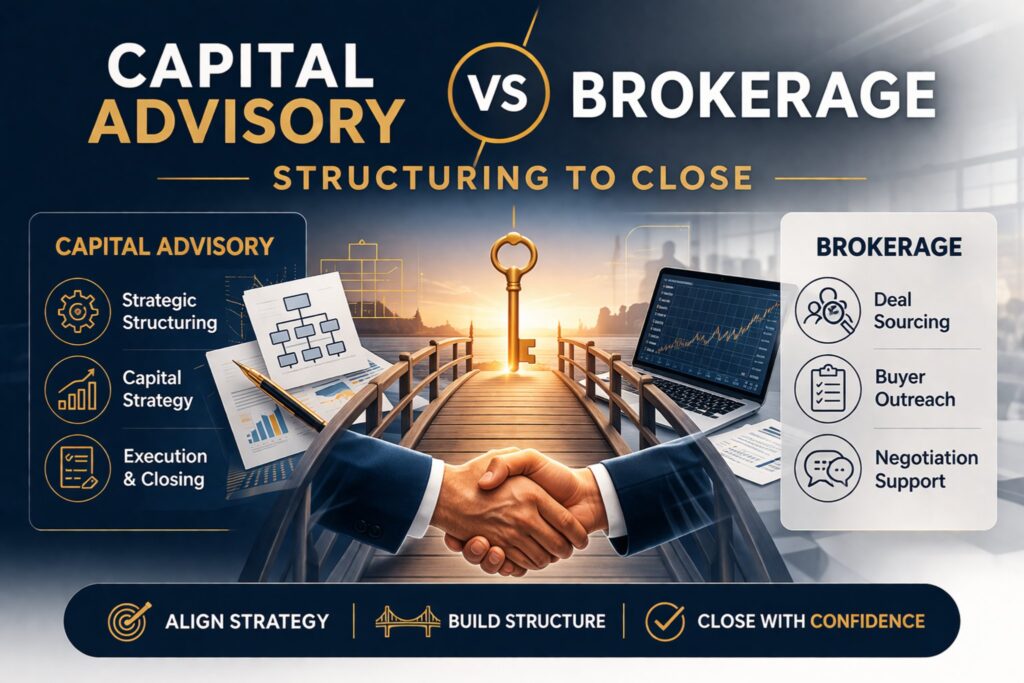
Positioning also means deciding how many lenders to approach and in what order. Going to a wide group without a strategy can produce inconsistent feedback and dilute interest; a targeted approach based on each lender’s appetite for the asset class, size and geography is usually more productive. Large and complex placements benefit from an intermediary who structures the transaction, prepares one coherent package and manages parallel conversations. Our Transaction Execution & Capital Structuring Services Agreement sets out how that execution mandate is organized.
A Pre-Submission Readiness Checklist
Before any file leaves your hands, confirm each of the following.
- Purpose and structure. The use of proceeds is stated in plain terms, the repayment source is identified, and the requested amount and term are defensible.
- Financials. Two to three years of personal and business tax returns, year-to-date profit and loss statements, balance sheets and a current net worth statement are included and reconcile with one another.
- Explanations. Any unusual items, one-time gains or irregular entries have a short written explanation attached.
- Property documents. Rent rolls, leases, the purchase agreement and the appraisal or appraisal plan are in order where an asset is involved.
- Ratios. DSCR, LTV and debt yield have been calculated, and you know which one constrains the request.
- Credit. Personal and business credit reports have been reviewed, errors corrected and any score concerns addressed.
- Equity. Your contribution is documented, with its source verified, and sized against a realistic expectation rather than the most optimistic one.
- Identity records. Names, addresses and registration details match across the application, corporate filings, tax records and bank statements.
- Entity chart and real estate schedule. Ownership is mapped, and existing debt and maturities are listed for every held asset.
- Timeline. Third-party reports and legal work are scheduled, and the lender sequence has been planned.
A file that clears this list is not guaranteed approval, but it removes the avoidable reasons for delay or decline. If several boxes remain unchecked, resolve them first. To discuss a transaction in confidence and test its readiness before going to market, contact us and we will outline the next step.