
Why Cannabis Financing Is Structurally Different: Federal Status and the Banking Gap
Cannabis financing sits outside the ordinary commercial credit market for one reason: US federal law has never caught up with state law. A licensed operator in a legal state can run a fully compliant business and still find that most regulated banks won’t touch its accounts, its real estate or its working capital. That gap shapes every structure, every price and every conversation with a lender.
Canada looks different on paper, since adult-use cannabis was legalized nationally in 2018. For many borrowers the result is much the same. According to LendCity’s 2026 guide, most Canadian banks still decline cannabis property mortgages, which leaves credit unions and B-lenders to fill the space. The same source notes that the Canada Small Business Financing Program generally does not extend to cannabis-related businesses, so a tool that mainstream small businesses take for granted is simply unavailable here.
What you get is a market run on private and specialty capital. Lenders price in regulatory risk, collateral that can be hard to enforce, and cash flows that depend on a licence. Pricing from adjacent sources reflects that. LendCity cites B-lender rates of 7.50% to 10.00%, roughly three to four percentage points above conventional commercial property lending, and one Canadian startup-funding guide puts the broader range at 4 percent to 20 percent or higher depending on the borrower and the product. Treat those figures as indicative rather than quotes; actual terms turn on the asset, the sponsor and the licence position.
Equity requirements also run heavier. One Canadian farm-mortgage source suggests down payments of 40-50% are common and sometimes higher, but that is a single-source claim and should be tested against live lender feedback before it anchors a model.
For sponsors and owners, the point is that cannabis financing is not a tougher version of normal financing. It is a different process. The lender universe is narrower, documentation is heavier, and the structure of the deal often matters more than the headline rate. Getting that structure right before approaching the market is where a disciplined capital process earns its keep.
The Lender Landscape in Canada and the US, with Recent Deal Examples
The lender pool splits into several tiers, and knowing which one fits a given project saves months of wasted outreach.
Specialty and platform lenders go after operators directly with working capital, equipment and property loans. Their marketing leans on speed and accessibility; one platform advertises approvals in 24 hours across a $5k-$5m range. That suits smaller needs but isn’t built for institutional-scale projects. Another property-focused lender reports loans for cannabis real estate in the range of $100K to $20M.
Credit unions and B-lenders are the practical route for Canadian cannabis real estate, as noted above, generally at a premium to conventional rates.
Institutional and syndicated credit serves the largest operators. Recent announcements tracked by New Cannabis Ventures show the scale and structure available to established multi-state and Canadian names:
- Decibel Cannabis announced a $61 million credit facility with ATB Financial on February 10, 2026.
- TerrAscend completed a $140 million debt financing with a 12.75% coupon, a four-year term and no prepayment penalties.
- Jushi refinanced its former first-lien and second-lien facilities with US$160 million of non-dilutive debt.
- Green Thumb announced an additional $50 million of senior debt on February 20, 2026.
These deals follow a pattern. They go to operators with scale, audited financials and clear licence positions, and they are priced well above conventional senior debt. A 12.75% coupon shows what the risk premium looks like even for strong credits.
Capital is still scarce at the operating-business level, too. When FundCanna announced a senior credit facility of up to $60 million in May 2026, it noted that unsecured lending to operating businesses has remained largely absent from institutional portfolios. Roundups such as Castle Placement’s April–May 2026 review of capital raises show an active market, but one concentrated among a limited set of recognizable investors.
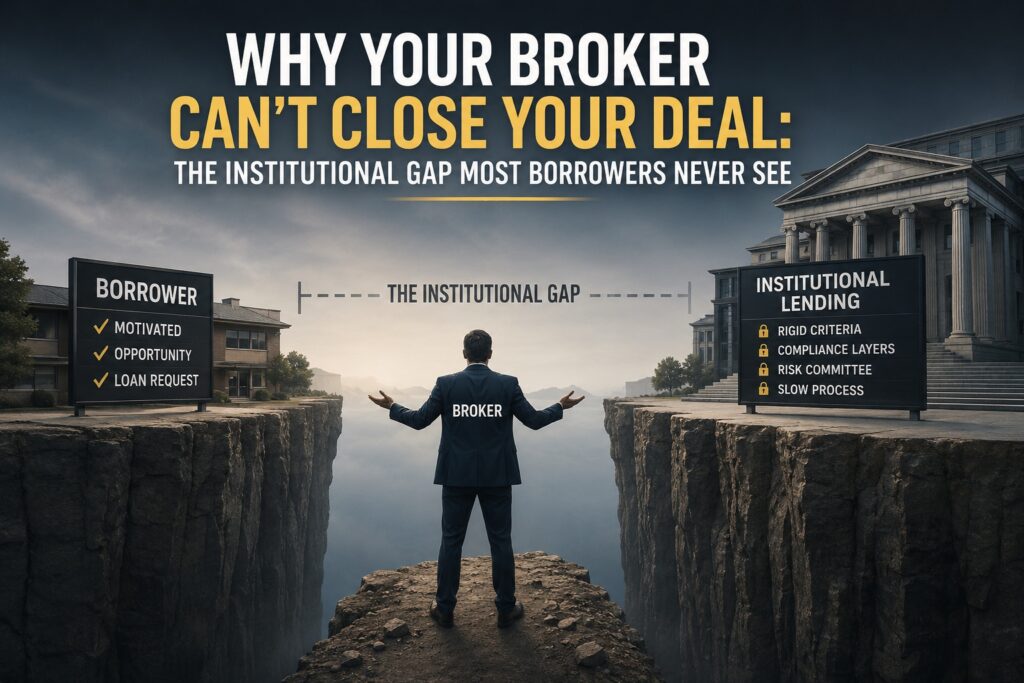
A sponsor who sits between the small-ticket platforms and the big syndicated deals faces a real gap. Mid-market and large single-asset transactions need someone who can position the story, match it to the right lenders and manage the process. That is the role an independent capital intermediary plays.
Matching Capital Type to Project Stage: Construction, Acquisition, ABL, Structured and DIP
Picking the wrong instrument for a project’s stage is one of the most common reasons cannabis deals stall. Each capital type answers a different question, and lenders in this sector have little patience for mismatches.
Construction financing funds build-outs of cultivation, processing or retail facilities. Lenders look at licence status, permits, the contractor’s and sponsor’s experience, and the equity committed up front. Given the heavy equity norms described earlier, sponsors should expect to show meaningful skin in the game before a draw schedule is even discussed.
Acquisition financing supports the purchase of operating assets or real property. The analysis centres on the quality of the licence, whether approvals transfer, the target’s cash flow and legal diligence on the seller. In cannabis, an acquisition is as much a regulatory transaction as a financial one, so timelines tend to be set by approvals rather than credit committees.
Asset-based lending works where there is collateral worth lending against: inventory, receivables, equipment or real estate. It can free up working capital without diluting ownership, but advance rates are conservative because inventory and equipment are harder to realize in a default.
Structured and equity capital fills the gaps senior debt leaves: mezzanine tranches, preferred equity, sale-leasebacks or hybrid instruments. This is the thinnest part of the market, and where careful positioning matters most. A transaction that blends senior debt with a structured layer can lower the overall cost of capital compared with leaning on a single expensive source.
DIP financing serves operators in restructuring. A debtor-in-possession facility provides liquidity during a court-supervised process, and for a stressed cannabis operator it can mean the difference between an orderly sale and a forced liquidation. It is specialized, fast-moving work that few mainstream sources address, and it calls for lenders who understand both insolvency law and the sector.
What ties these together is sequencing. A sponsor who knows where the project sits on this ladder, and what the next lender will want to see, can approach the market with a coherent request rather than a generic ask. Our own process is built around exactly that sequencing: diagnose readiness first, then structure, then execute.
Policy Watch: Rescheduling and the SAFE Banking Act, with Dated Status
Policy headlines move faster than capital does, so it helps to separate what has actually changed from what has only been proposed. The status below reflects sources dated through mid-2026 and should be re-verified before any decision relies on it.
Rescheduling. According to GrowerIQ’s producer guide, a federal order effective April 28, 2026 moved FDA-approved drug products containing marijuana, and marijuana handled under a qualifying state medical marijuana licence, from Schedule I to Schedule III. Adult-use and recreational product, along with unlicensed material, remains in Schedule I. Other sources cite April 23, 2026 for a related executive order, which appears to be a separate step, so confirm the exact sequence against primary documents.
What rescheduling does not do. Standard C’s analysis of the change notes that nothing in rescheduling altered a financial institution’s Bank Secrecy Act obligations. The compliance burden that keeps banks cautious has not been lifted by the reclassification alone.
Lender expectations. Commentary gathered by Cannabis Industry Insights suggests rescheduling will raise demand for capital before it raises supply. That is a useful corrective to the assumption that cheaper money arrives automatically. In the near term, more borrowers may chase roughly the same pool of lenders.
SAFE Banking. The SAFE Banking Act of 2026 was reintroduced on June 25, 2026 with bipartisan sponsorship, and Senator Merkley’s office has said it remains necessary even after the Schedule III move. The bill is still pending in Congress, with support from the American Bankers Association. Passage would be the more direct route to giving banks legal comfort, but pending legislation is not law, and no financing plan should assume a date.
For Canadian borrowers, US policy touches cross-border investors and lenders more than domestic credit availability, though sentiment travels. A sponsor planning around either market should treat policy as upside to capture if it arrives, not as a base-case assumption.
Readiness Checklist and Next Steps Before Going to Market
With a narrow lender pool and heavy diligence, a sponsor gets one good first impression. Going to market before the file is ready costs credibility that is hard to rebuild. A practical readiness review covers the following:
- Licence and regulatory standing. Current licences, pending applications, transferability and any compliance history, documented and organized.
- Sponsor equity and track record. Evidence of committed capital and relevant operating or development experience, since equity expectations in this sector are high.
- Property and collateral. Title, zoning, environmental and appraisal readiness, plus a clear view of what collateral lenders can realistically underwrite.
- Financials and projections. Historical statements where they exist, and defensible projections that reflect cannabis-specific pricing and margin pressures.
- Capital stack and purpose. A clear explanation of how much is needed, in what form, and why that structure suits the project stage.
- Exit and repayment path. A credible account of how lenders get repaid, whether through refinancing, sale or cash flow, without leaning on policy changes that may not arrive.
Each item maps to a question a lender will ask in the first meeting. Answer them in advance and timelines shorten, and the offers that come back improve.
That is the purpose of our confidential Project Navigator™ capital-readiness diagnostic: it finds the gaps in the file before lenders do, so the transaction can be positioned deliberately. Once a structure is settled, execution can be formalized under a Transaction Execution & Capital Structuring Services Agreement, which sets out how the mandate runs from structuring through placement.
Cannabis financing rewards preparation more than most sectors. The sponsors who close are the ones who understand the lender tiers, match the instrument to the project stage and track policy without betting on it. If you are weighing a transaction in Canada or the US, the next step is a private conversation about where your project stands; you can reach our team through Contact Us.