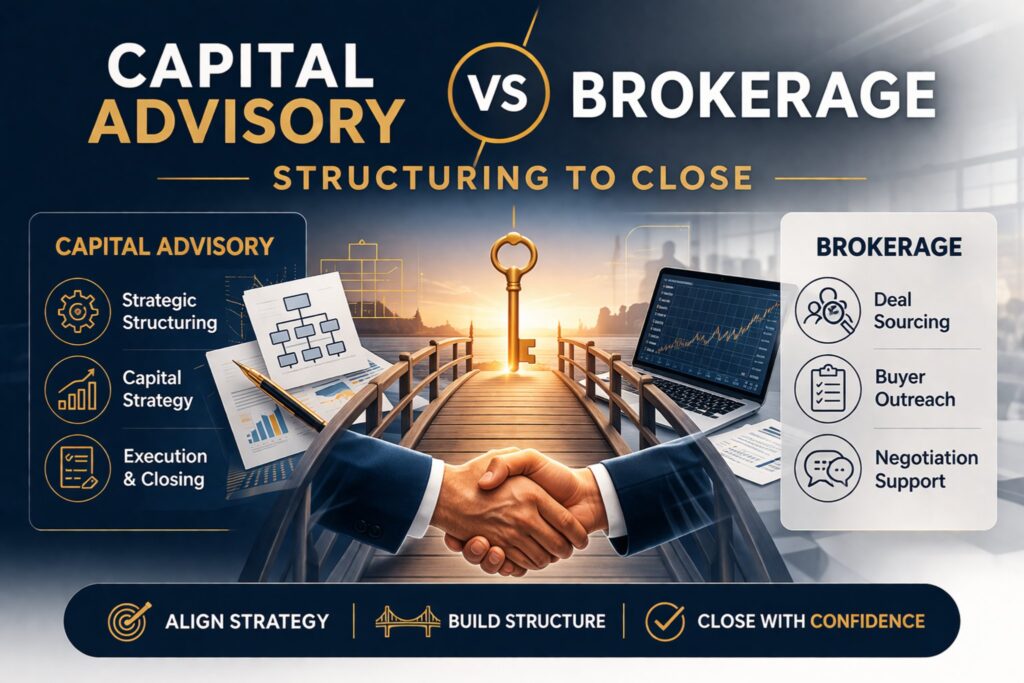

A deal can look perfect on paper. The location is strong, the tenants are solid, and financing seems within reach, yet it still falls apart before closing. More often than not, the real problem isn’t the property. It’s that the asking price was never grounded in a number a lender would actually support.
That gap between hope and lender reality has a name in commercial real estate: an unrealistic valuation anchor. Commercial property valuation, the process of estimating what a commercial building is actually worth, exists to prevent exactly this problem. But when a broker sets an anchor on the best possible outcome rather than defensible numbers, every appraisal, underwriting review, and negotiation that follows has to fight uphill. This article walks through how commercial property valuation really works, why brokers often anchor too high, and what sponsors can do before they go to market to keep a deal from stalling.
Let’s start with what a valuation anchor actually is.
Key Takeaways
- Valuation anchors fail when they ignore lender-supportable numbers rather than wishful pricing.
- The three core methods, income capitalization, sales comparison, and the cost approach, need to reconcile with each other, not rely on a single favorable figure.
- Inflated net operating income and overly optimistic projections are the most common reason deals stall at underwriting.
- A pre-market stress test of the numbers prevents wasted months and protects a sponsor’s credibility with lenders.
- Advisors who structure a deal around lender reality are not the same as brokers who simply shop a package around.
What Is a Valuation Anchor, and Why Does It Sink Deals?

A valuation anchor is the number a seller, sponsor, or broker fixes on early in a deal, often before a lender or appraiser has even looked at the file. In commercial real estate, that anchor usually comes from hope, a past market peak, or a broker’s push to win the listing, rather than from lender-supportable data such as comparable sales or verified income.
Once that number gets set, everything downstream has to work against it:
- The listing price shapes buyer expectations before any real underwriting happens.
- The financing request gets built around a figure the asset can’t actually support.
- The eventual commercial property valuation and appraisal both land below the anchor.
That gap triggers renegotiation, financing delays, or why deals get declined, and it wastes months of time while eroding trust with lenders a sponsor will need again later.
How Is Commercial Property Valuation Actually Calculated?

Commercial property valuation rests on three core methods: income capitalization, sales comparison, and the cost approach. Each one answers a slightly different version of the same question, what is this asset actually worth. Appraisers and lender institutional capital advisory just one method; they run two or more and reconcile the results. This matters because a figure that looks solid under one approach can fall apart under another. Unrealistic valuation anchors unravel for exactly this reason. An inflated number is almost always built on one favorable calculation, a generous cap rate, a cherry-picked comparable, or an optimistic projection, rather than a figure that survives cross-checking. Small changes to a single input, the cap rate applied, the comparables chosen, or the depreciation assumed in the cost approach, can swing the indicated value by hundreds of thousands of dollars. That sensitivity is why an anchor built on one rosy assumption collapses the moment an underwriter runs the same numbers independently.
| Method | Formula | Best Used For |
|---|---|---|
| Income capitalization | NOI ÷ Cap Rate | Stabilized, income-producing assets |
| Sales comparison | Comparable sales ± adjustments | Markets with regular trading activity |
| Cost approach | (Replacement Cost − Depreciation) + Land Value | New or special-purpose buildings |
Income Capitalization Approach

The income capitalization approach divides a property’s net operating income (NOI) by a market capitalization rate, so Property Value equals NOI divided by Cap Rate. This formula is more sensitive than it looks. A stabilized office property producing $1,200,000 in forward NOI, in a submarket where comparables trade at a 6.5% cap rate, works out to roughly $18.46 million. Nudge that cap rate to 7.0%, and the same income supports only about $17.14 million, a swing of roughly $1.3 million from half a percentage point.
Appraisers use forward-looking NOI, the income a property is projected to earn over the next 12 months, not trailing figures from the year before. Buyers get paid on future cash flow, not past performance. This is usually where an inflated anchor gets caught first, since a broker’s projection built on assumed rent increases or lease renewals unravels the moment an underwriter tests it against forward, lender-supportable NOI.
Sales Comparison Approach
The sales comparison approach sets a practical ceiling on price by looking at what similar properties actually sold for, typically within the trailing six to twelve months. Three to five solid comparables are usually enough for a defensible estimate; fewer than that leaves the number resting on thin data. Unrealistic anchors often come from citing the single best comparable sale in the market rather than the representative one, which inflates the ceiling the asking price should respect.
Cost Approach
The cost approach values a property as replacement cost minus depreciation, plus land value. It works well for new construction or special-purpose buildings, like schools, where sales data and income history are limited. Applied to a stabilized income property, though, it gets misused to justify a high price, since it ignores cash flow entirely and says nothing about what a tenant will actually pay to occupy the space.
Why Do Brokers Set Unrealistic Valuation Anchors in the First Place?

Brokers set unrealistic valuation anchors mainly because of how they get paid. A volume-driven broker earns a commission on closing, so a broker opinion of value (BOV) that comes in high can win the listing or mandate away from a competitor, even if the number has little chance of holding up under appraisal. That incentive doesn’t disappear once the listing is signed; it shapes every conversation with a buyer or lender that follows.
The problem compounds when the incomplete financing packages is incomplete or disorganized. Inflated Adjusted EBITDA figures, missing cash flow models, or unexplained swings in reported revenue signal risk to an underwriter well before any ratio gets calculated. A sponsor who hasn’t capital readiness their own commercial real estate valuation has no way of knowing the anchor won’t survive the first serious look.
Submitting the deal to the no true lender fit makes things worse. A package built around an inflated number, sent to a lender that doesn’t fund that asset type or risk profile, wastes weeks and damages a sponsor’s credibility before the right conversation ever happens. Underwriters catch the gap between the anchor and the supportable number quickly, and once they do, the deal gets repriced, conditioned, or declined outright.
How Can You Reset a Deal with an Unrealistic Valuation Anchor?
Resetting a deal starts with stress-testing the numbers before they reach a lender’s desk:
- Pull the projected NOI apart and check it against comparables a lender would actually accept, not the best sale in the market, but a representative one from the trailing six to twelve months.
- Rebuild the capital stack senior debt, mezzanine, and equity, around that tested figure instead of the original ask.
- Match the financing request to what the asset can realistically support, rather than what the listing once promised.
This is the kind of review Equis Capital Finance our process to market. Its Project Navigator tool tool examines a transaction, tests deal readiness, and maps a realistic path from proposal to closing, drawing on more than 20 years of lender-side experience originating and closing commercial loans. Rather than shopping the same brokers shop deals on a list, the firm structures the file and targets a short list of lenders whose criteria actually match the asset’s size and risk profile.
Where a genuine gap remains between what a seller wants and what a lender will support, structure can often bridge it. Seller notes, performance-linked earnouts, and equipment sale-leasebacks let a transaction close near its anchor while giving the lender a figure it can underwrite with confidence.
The Takeaway
Commercial deals rarely die because the property is weak. They die because the number attached to it was never realistic in the first place. Commercial property valuation, done properly across income capitalization, sales comparison, and cost methods, gives sponsors a figure that can survive appraisal, underwriting, and negotiation, rather than one that only survives the first conversation.
Before listing a property or submitting a financing request, stress-test the projections against lender-supportable data, and work with capital advisory vs brokerage around that reality instead of shopping a hopeful number to every lender on a list.
Equis Capital Finance takes that structuring approach, using decades of lender-side experience to align the capital stack with what a deal can actually support, long before broker optimism meets an underwriter’s spreadsheet.
Frequently Asked Questions
What Is the Difference Between a Valuation and an Appraisal?
A valuation is an estimate of worth that anyone can prepare using methods like income capitalization or sales comparison. An appraisal is a formal, independent opinion from a licensed commercial property valuer, following professional standards such as USPAP. Lenders typically require a formal appraisal before approving commercial mortgage financing, while an internal valuation may be enough for early planning.
How Much Does a Commercial Appraisal Cost?
Commercial appraisal cost varies with the property’s size, complexity, and location. A small retail unit costs far less to appraise than a large industrial facility or a special-purpose building needing detailed analysis. This fee sits separately from any advisory or deal structuring cost a sponsor pays to prepare the broader financing package.
Can a Broker’s Opinion of Value Be Trusted?
A broker opinion of value can be useful for early planning, but it may be shaped by the broker’s pending commission on a sale. It is not a substitute for an independent appraisal or stress-tested projections. For lender negotiations, a defensible, lender-supportable number carries far more weight than an optimistic estimate.
What Happens When My Valuation Doesn’t Match What the Lender Sees?
Underwriters calculate their own supportable value from NOI, comparables, and cap rates, independent of any asking price. A mismatch usually means a smaller loan amount, added conditions, or a decline rather than an automatic dead deal. In most cases, this is a structural gap in projections or pricing that can be fixed with better data.
How Do Rising Interest Rates Affect My Property’s Value?
Higher interest rates tend to push cap rates up, which lowers a property’s indicated value even if nothing about the asset itself has changed. The Bank of Canada raised its policy rate from 0.25% to 5% between 2022 and 2023, a shift that compressed commercial property values across many asset classes in a short period.