
Your deal has been sitting with your broker for weeks, and every update sounds the same: “still working on it,” “waiting to hear back,” “should know soon.” Two or three lenders have already passed, your financials have been resent more than once, and nobody can give you a straight answer about what went wrong. The frustrating part is that your business looks solid on paper. Strong revenue, a clear plan, real collateral, yet the file keeps stalling at the lender stage instead of moving toward a closing table.
The real issue is rarely a shortage of available capital or tight credit markets. It usually comes down to lender fit, meaning how well your deal’s structure, risk profile, and documentation match what a specific lender is actually built to approve. This article breaks down what lender fit means, why brokers so often miss it, how to spot an approval gap before you apply, and why mandate-based lender matching, the approach Equis Capital Finance uses, gets complex commercial deals closed instead of stuck.
Key Takeaways
- Lender fit, not tightening credit conditions, is usually the real reason a commercial deal stalls or gets declined at the lender stage.
- A long list of lender contacts is not committed capital; the deal still needs to match that lender’s product and risk appetite.
- Mismatched loan products, weak financing packages, and poor sequencing account for most failed submissions.
- Fixing the file before lender outreach begins prevents repeated declines and protects future pricing.
- Equis Capital Finance structures deals around mandate-based lender targeting rather than circulating one package to every contact.
What Does Lender Fit Actually Mean?

Lender fit describes how closely a deal’s structure, risk profile, and documentation match what a specific lender is built to approve. Every lender, whether a chartered bank, credit union, insurance company, or private fund, works from its own credit box: the loan sizes, asset types, debt levels, and jurisdictions it actually wants to fund right now. A deal can carry below-market risk and still get declined simply because it was sent to a lender whose box never included it in the first place.
This is different from general creditworthiness. A sponsor with strong financials, clean credit, and a track record of finished projects can still face rejection if the loan type, asset class, or timeline sits outside that lender’s current appetite. Good credit opens doors; true lender fit decides which specific door actually opens for that deal.
Why Your Broker Can’t Close Your Deal
When a broker cannot close a deal, the reflex explanation is usually that the market is tight or lenders are being cautious, but that framing rarely tells the full story. Most stalled commercial files fail because of how they were put together and where they were sent, not because capital has disappeared from the market. A broker who knows dozens of lender contacts can still send a deal nowhere useful if none of those contacts are actively looking for that asset type, loan size, or structure this quarter.
Having a name and a phone number at a bank is not the same as committed capital; it only becomes capital once the deal matches that institution’s current credit policy and sector focus. According to Statistics Canada’s survey on financing and growth of small and medium enterprises, roughly one in five businesses that sought external financing reported being turned down or only partially approved, a gap that often has less to do with the strength of the business and more to do with where the request landed.
Many brokers work from a short list built over years of relationships, and calling five known contacts feels faster than researching which lenders are actually funding a given structure. A construction request sent to a lender that only finances stabilized, income-producing assets, or a bridge loan pitched to an institution built for long-term mortgages, is set up to fail before anyone reads the financials closely.
Lender Mismatch

lender mismatch happens when a deal’s asset type or structure does not fit what a lender currently funds. Construction loans get pitched to lenders that only finance stabilized assets, while short-term bridge requests land on desks built for long-term amortizing mortgages. This usually happens because a broker defaults to familiar contacts instead of researching the deal’s real requirements first.
Incomplete or Weak Financing Packages

Thin spreadsheets, outdated financial statements, missing rent rolls, and pitch decks that read like marketing brochures all signal risk before an underwriter reaches the actual numbers. Lenders use documentation to judge both the deal and the sponsor’s discipline. When a package looks disorganized, the response is predictable: a smaller loan, higher pricing, tighter covenants, or a straightforward decline.
Unsupported Projections and Unresolved Risks
Revenue projections not backed by signed leases, comparable sales, or solid market data raise flags during underwriting. The same applies to unresolved permits, zoning questions, or environmental issues that surface midway through the process. Lenders that were initially interested often pull back once these gaps appear, because deals get declined by lenders what they cannot verify.
Sequencing Errors
sequencing errors happen when a broker starts lender conversations before the file is actually ready to be reviewed. Sending an incomplete package to generate interest often backfires, leading to repeated re-submissions and weeks of lost time. Worse, lenders remember a messy first pass, which can make the same deal harder to finance later, even once the gaps are fixed.
How Can You Tell If a Deal Has a Real Approval Gap?
An approval gap is the specific shortfall between a deal’s current file and what a particular lender requires before issuing a term sheet. Spotting this gap before your next lender conversation means asking pointed questions about the capital stack, assumptions, and collateral rather than waiting for a decline letter to explain it afterward.
A few patterns show up again and again in deals that stall for this reason:
- An unclear capital stack, where equity, mezzanine, and senior debt positions have not been clearly defined or documented for a lender to review.
- Assumptions about rent growth, occupancy, or exit value that are not backed by signed leases, appraisals, or comparable transactions.
- A mismatch between the stated loan purpose and the product requested, such as asking for permanent financing on a project still under construction.
- Missing or thin collateral support relative to the amount requested, along with no clear, lender-credible exit strategy at maturity.
Why Standard Brokers Struggle With Complex Deals
brokers struggle with complex deals are built around simple, repeatable files that fit mainstream bank products, like a conventional term loan against a stabilized rental property. These models work well for straightforward deals because the lender box is well known and the paperwork is standardized across institutions. The same approach starts breaking down once a transaction involves construction financing, mezzanine capital, or subordinated debt.
These structures fall outside most brokers’ usual contact list and, often, their day-to-day experience. Add in a crowded lending environment, Innovation, Science and Economic Development Canada estimates that about 98% of employer businesses in the country are small enterprises, and it becomes clear why complex files get pushed toward the same handful of mainstream lenders instead of the specialized ones actually built to fund them.
How Equis Capital Finance Builds True Lender Fit

Equis Capital Finance operates as a capital markets advisor rather than a traditional broker, studying the deal itself before picking up the phone. The firm matches each transaction to lenders based on product type, risk appetite, and jurisdiction, drawing on relationships across banks, insurance companies, pension funds, credit unions, and private lenders across North America. That range means a non-recourse construction request and a mezzanine piece are not sent down the same narrow path.
Two services support this process directly:
- Project Navigator reviews a transaction, maps out lenders whose mandates genuinely fit, and lays out a realistic path from proposal to closing.
- The Capital Readiness Review helps previously declined borrowers group lender feedback by theme and rebuild a stronger package, rather than resending the same file to a different name on the list.
The Takeaway
Deals rarely die because capital has disappeared from the market. They die because the file was mismatched to the wrong lender, built on thin documentation, or pushed to market before it was actually ready. Fit, not market conditions, usually decides whether a commercial transaction reaches closing or sits in limbo for months.
Before your next submission, it’s worth asking a direct question: would this file pass the same test an internal bank credit team would apply?
If the honest answer is no, the fix is not another round of calls to the same lenders. It starts with reviewing the structure, the documentation, and the targeting, then matching the deal to lenders actually built to fund it.
Frequently Asked Questions
Is Lender Fit the Same as Having Good Credit?
No, strong personal or business credit does not guarantee lender fit if the loan type or deal structure doesn’t match what that lender actually funds. Fit covers product type, jurisdiction, and risk appetite alongside credit quality, so a well-qualified sponsor can still be declined by the wrong lender.
How Long Does It Take to Fix a Lender Fit Problem?
Some gaps, like missing rent rolls or outdated financials, can be fixed within days or a couple of weeks. Structural gaps, such as an unclear capital stack or unresolved permits, take longer and usually need advisory input before a file is ready to resubmit.
Can a Declined Deal Be Resubmitted Successfully?
Yes, a declined deal can be resubmitted successfully once the lender’s feedback has been grouped by theme and genuinely addressed rather than ignored. Repeated weak submissions without changes can damage pricing and terms on future attempts, so it pays to fix the file first.
What Size of Deals Benefit Most From Mandate-Based Lender Matching?
Larger, complex commercial transactions, including multi-million-dollar bridge loans, construction financing, and mezzanine debt, benefit most from mandate-based lender matching. Simple, small residential-style mortgages are less affected, since those products are more standardized across lenders.
Why Do Brokers Default to the Same Lenders for Every Deal?
Brokers often default to familiar lenders out of convenience and existing relationships rather than deal-specific research. Broad outreach can feel productive, but it frequently wastes time and credibility if the underlying fit between the deal and the lender was never actually there.
What Is the Difference Between a Broker and a Capital Markets Advisor?
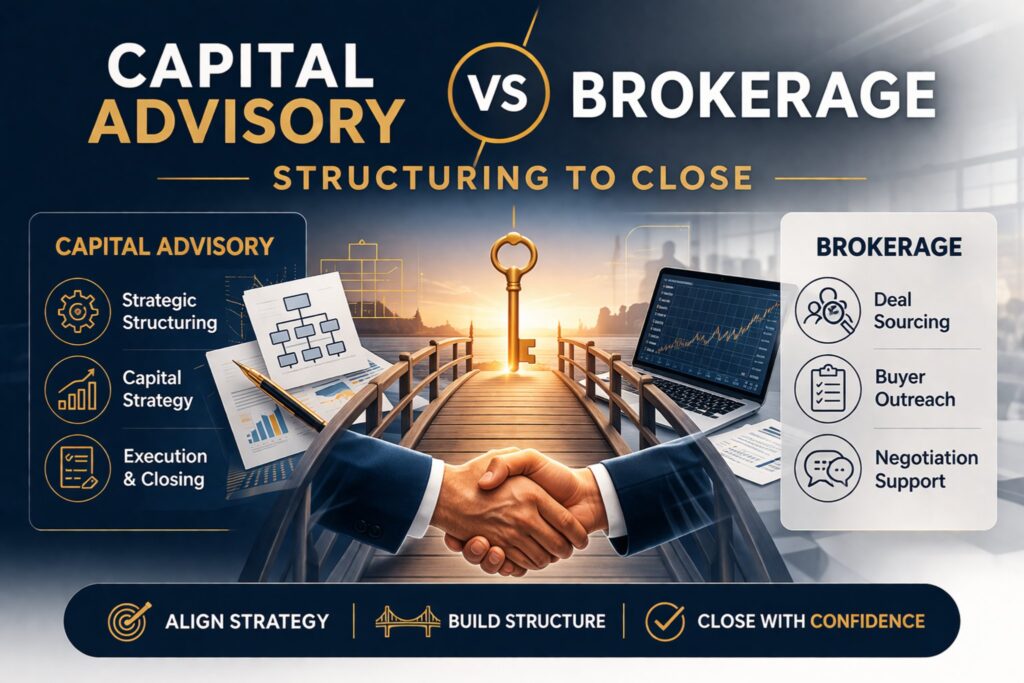
A broker typically circulates a financing package broadly across a contact list and hopes something sticks. A capital markets advisor capital advisory vs brokerage, matching it to lenders based on fit, and operates as an intermediary rather than a direct lender.
Conclusion
A stalled commercial deal is frustrating, but it rarely means your business is unfundable. More often, it means the file reached the wrong lender, carried gaps an underwriter couldn’t ignore, or moved to market before it was ready.
Closing complex transactions consistently takes more than a long contact list; it takes a deal built around true lender fit from the start. Equis Capital Finance works through Project Navigator™ and its Capital Readiness Review to match sponsors with lenders whose mandate actually fits the deal, giving the next submission a real shot at reaching the closing table.