A cannabis business can show strong sales and still get turned down for financing, and that happens more often than you’d think. The reason is rarely the business itself. Cannabis financing decisions hinge on how well a company’s financial data is organized, not only on how much revenue it generates. Banks and private lenders alike move cautiously around the sector, and federal rules, inconsistent licensing, and weak internal paperwork all add to the hesitation.
This article walks through what institutional lenders actually look for when they open a cannabis funding file. You’ll see how to organize financial statements, licensing proof, and projections so they hold up under scrutiny. It also maps financing structures, from cannabis lending to cannabis equity financing to asset-based lending, against different stages of business growth. By the end, you’ll know what separates a fundable file from one that draws a quick decline, and where firms like Equis Capital Finance fit into that process.
Key Takeaways
- Cannabis lending faces banking barriers, including federal illegality in the U.S. and anti-money-laundering exposure for Canadian banks.
- Lenders judge sponsor discipline by how well your documents are organized, not only by the numbers themselves.
- Financial projections and licensing proof are non-negotiable for institutional review.
- Debt, equity, and asset-based lending suit different stages of business growth.
- A pre-submission readiness review prevents wasted applications and weak terms.
Why Is Cannabis Financing So Hard To Secure?

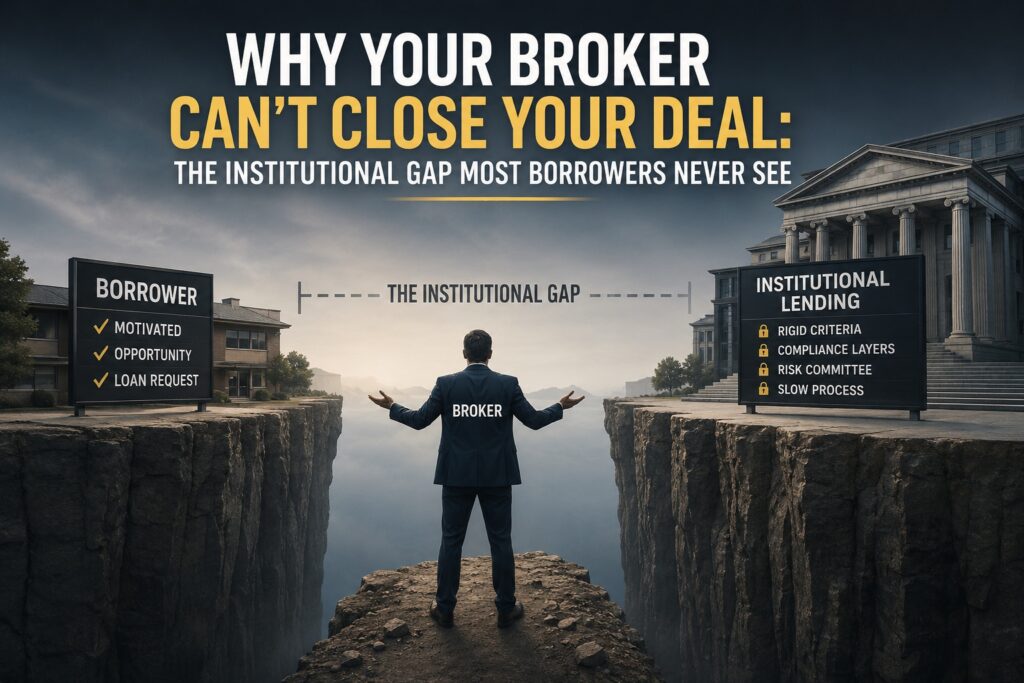
Cannabis financing is difficult to secure mainly because cannabis remains illegal at the federal level in the United States, even where provinces and states permit it. This creates a problem for Canadian operators too. Major Canadian banks with U.S. branches worry that cannabis revenue, even fully legal revenue, could be treated as proceeds of crime under American anti-money-laundering rules. That risk pushes most large banks out of the sector entirely, no matter how healthy a specific business looks on paper.
The second barrier sits inside the banks themselves. Most lenders never built the compliance systems needed to underwrite cannabis risk properly, covering everything from licensing checks to seed-to-sale tracking. Instead of reviewing each file case by case, they apply a blanket refusal across the whole industry. This is a big part of why cannabis financing and advisory so often comes from specialized, non-bank sources rather than a borrower’s existing bank.
What Do Institutional Lenders Look For In A Cannabis Financing Application?
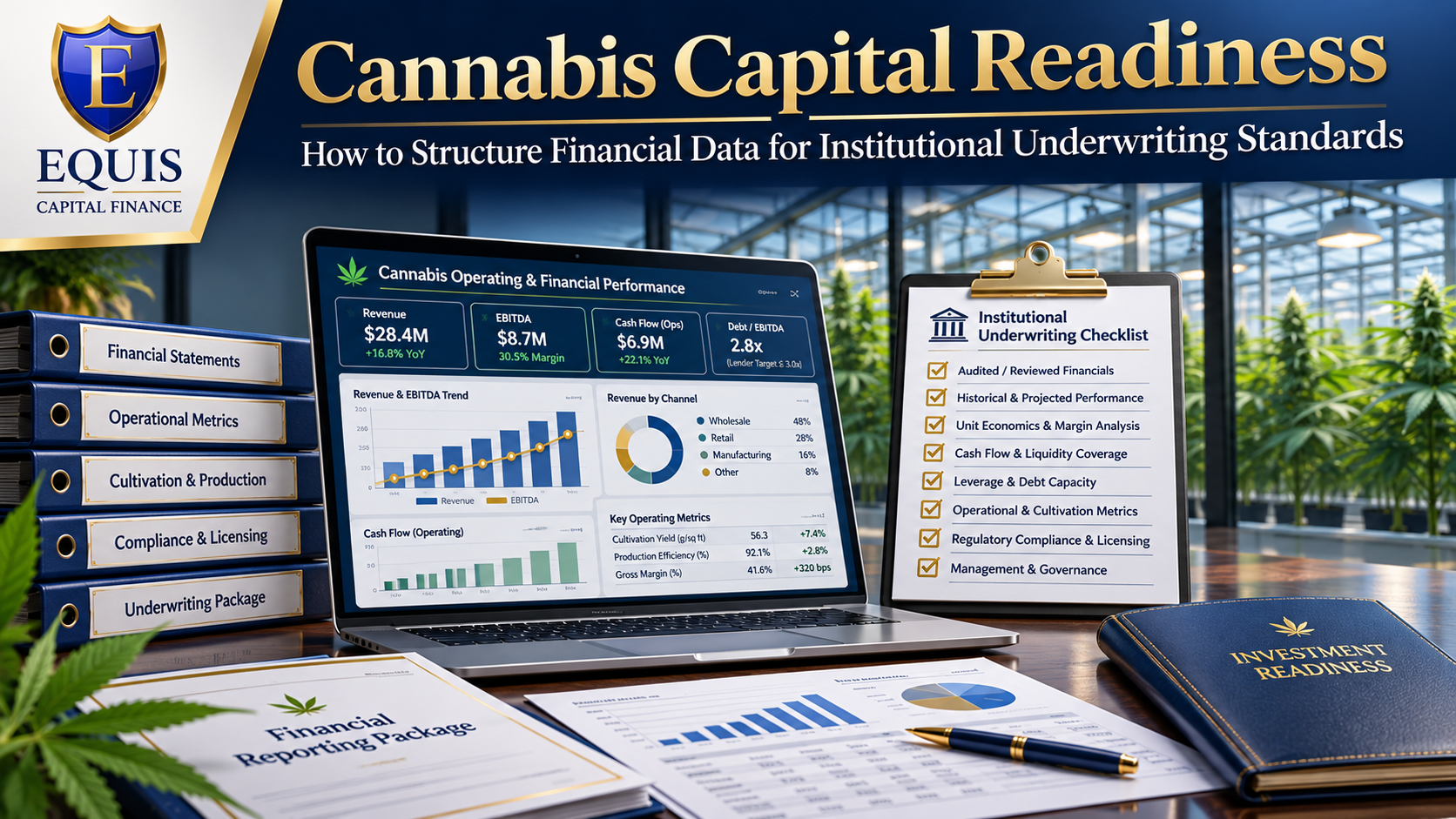
Institutional lenders look for proof that a cannabis business can repay its debt and run a clean, licensed operation, and they judge that proof as much from the quality of the submission as from the numbers themselves. A polished application signals a disciplined operator, while a scattered one raises doubt before an underwriter checks a single ratio. institutional capital advisory requires transparency and proven operational discipline, and lenders read a file for both qualities. Partial or poorly argued packages tend to shrink loan size, raise pricing, or trigger an outright decline, which is why preparation matters as much as the underlying business performance.
- Realistic financial projections. Projections need to survive scrutiny, not just look impressive on a spreadsheet. Inflated adjusted EBITDA figures create valuation gaps that underwriters catch fast, and that hurts trust in the rest of the file.
- Licensing and compliance proof. Lenders want Health Canada licences, provincial approvals, security plans, and seed-to-sale standard operating procedures gathered in one place. Clean compliance records remain one of the strongest positives in any cannabis review.
- Clear use of funds. Spending should be broken into categories such as construction, equipment, working capital, marketing, or acquisitions. This shows a thoughtful deployment plan rather than a vague request for cash.
- Collateral documentation. Property appraisals, equipment lists, lease summaries, and working capital asset based solutions give lenders something concrete to underwrite against.
- An organized data room. Revenue figures must match across every document submitted, because mismatched numbers signal risk before any ratio gets calculated.
- Principal-level financial history. Lenders review personal credit reports and net worth alongside the business numbers. A weak credit score or an undisclosed liability can sink an otherwise strong file.
How To Organize Your Data Room

Organizing a cannabis financing data room starts with consistency, since every document you submit should show the same revenue figures. Lenders cross-check bank statements against tax returns, profit and loss statements, and balance sheets, and any mismatch raises a flag before they even reach your ratios. Label files clearly and group them by category so a reviewer can move through the package quickly instead of hunting for missing pieces.
Collateral evidence belongs in its own section, including property appraisals, equipment lists, lease summaries, and schedules of receivables and inventory. Health Canada licences, provincial approvals, security plans, and seed-to-sale standard operating procedures should also be ready upfront rather than requested later. Having these items prepared before the first lender conversation shortens the review timeline considerably.
Building Cannabis Financial Projections That Hold Up
Strong cannabis financial projections avoid inflated adjusted EBITDA figures, since underwriters spot valuation gaps quickly and that undermines the rest of the file. Break your use of funds into clear categories such as construction, equipment, working capital, marketing, and acquisitions so lenders see a thoughtful deployment plan rather than a round number pulled from thin air. A conservative, well-documented projection builds more confidence than an optimistic one that falls apart under review.
Which Cannabis Financing Structure Fits Your Business Stage?

The right cannabis financing options depends mostly on how far your business has grown, since lenders weigh collateral and operating history differently at each stage. A pre-revenue start-up and a scaled, multi-location operator simply aren’t competing for the same capital, and matching your request to your stage saves time while avoiding declines that have nothing to do with the strength of your plan.
- Start-up and pre-revenue businesses typically rely on founders’ capital, friends and family loans, or angel investors and family offices, since debt is hard to secure without operating history or collateral. Traditional lenders have little to underwrite against at this stage, so equity-style capital usually fills the gap.
- Growth-stage businesses gain access to asset-backed facilities, equipment finance, and working capital solutions as revenue and collateral build, alongside early mezzanine debt for operators who need more capital than a senior lender alone will provide.
- Scaled and public operators can access structured preferred equity, multi-lender project finance, stock-backed loans, SR&ED financing, and capital markets solutions such as sale-leasebacks or public offerings, since a longer track record and larger asset base support more complex capital stacks.
Equity Versus Debt: What’s The Trade-Off?
equity financing for Canadian businesses means giving up a share of ownership in exchange for capital that carries no monthly payment obligation. That trade-off suits cannabis businesses tackling long-term projects such as cultivation build-outs, since there’s no fixed repayment pulling at cash flow during the early years. The cost shows up later, when founders share future profits and governance becomes more formal, often including board input or approval rights for the investor.
Asset-based lending takes a different path. It borrows against real estate, equipment, inventory, and receivables already on the books, and secured lending of this kind can support meaningful loan amounts without diluting ownership. For operators who want to keep control of their company, cannabis asset based solutions advisory often makes more sense than bringing in an equity partner.
How Equis Capital Finance Helps Cannabis Businesses Get Capital Ready

Equis Capital Finance helps cannabis businesses prepare their financial data for institutional review before they approach a lender. Its Capital Readiness Assessment checks whether the capital sought is realistically achievable, how the deal should be structured, and what gaps need fixing before a lender ever sees the file. This step alone catches many of the issues that would otherwise cause a quick decline.
From there, a diagnostic called Project Navigator diagnostic maps the transaction to lenders who actually fund that category of deal, rather than shopping a file to institutions that will only decline it. The firm works as a capital markets intermediary, not a direct lender, drawing on a Private Capital Group and a capital placement network, private funds, credit unions, insurance capital, and pension investors, typically for deal sizes between $1 million and $500 million.
A well-organized data room and a realistic set of projections do more to move a cannabis financing file forward than any amount of revenue growth alone.
To Sum Up
Cannabis capital readiness comes down to discipline as much as business quality. A profitable, well-run operation can still get declined if its financial statements, projections, and licensing proof aren’t organized the way institutional lenders expect. Matching your financing structure, whether debt, equity, or asset-based lending, to your actual growth stage prevents wasted time chasing the wrong capital and avoids settling for weaker terms than your business deserves.
Before you approach a lender directly, consider getting a readiness review done first. Equis Capital Finance offers exactly this kind of pre-submission check, catching the gaps that cause declines and pointing your file toward lenders who actually fund your category of deal. A little preparation now can save months of frustration later.
Frequently Asked Questions
How Long Does It Take To Close Cannabis Financing?
Simple cannabis financing transactions, such as a straightforward equipment loan, can close in a few weeks once documents are complete. Larger project finance deals, including construction loans or multi-lender facilities, often take several months. Timelines depend mainly on deal size, complexity, asset type, and how complete your documentation is from the start.
What Credit Score Do I Need For Cannabis Business Financing?
There’s no single minimum credit score for cannabis business financing, but principal-level credit history matters a great deal. Lenders review personal credit reports and net worth alongside business financials, and a weak score or an undisclosed liability can sink an otherwise strong application.
Can A Pre-Revenue Cannabis Start-Up Get A Loan?
Traditional debt is difficult to secure for a pre-revenue cannabis start-up, since there’s little operating history or collateral to underwrite against. Most early-stage operators instead rely on founders’ capital, friends and family loans, or angel investors and family offices until the business builds a track record.
What Is The Difference Between Cannabis Lending And Cannabis Equity Financing?
Cannabis lending requires repayment, often secured against collateral, but it lets you keep full ownership of the business. Cannabis equity financing shares future profits and some governance control with investors in exchange for capital that carries no monthly payment obligation.
Do I Need A Lawyer Or Accountant Before Applying For Cannabis Financing?
Experienced cannabis lenders typically coordinate with legal and accounting professionals as part of the process. Having clean compliance records and professional support in place before you apply strengthens your file and speeds up underwriting on the lender’s side.
What Happens If My Cannabis Financing Application Gets Declined?
Common reasons for decline include approaching the wrong lender category, weak projections, disorganized data, or an incomplete capital stack. A reputable lender or advisor should explain the reasons for the decline and outline what’s needed to qualify on your next application.