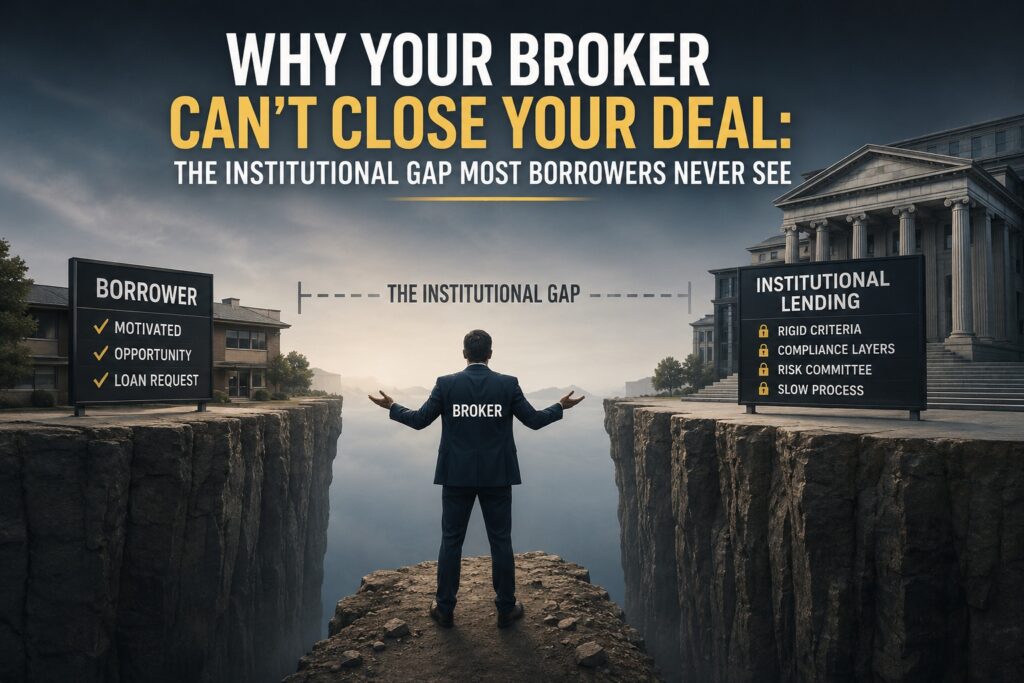

Founders often confuse confidence with strategy, and that mix-up shows up first in how they raise money. Ego drives a capital strategy when a business owner chases a big-name lender, inflates growth projections, or asks for more money than a deal can support, all to look impressive rather than to solve a real financing need. You can spot the pattern by checking whether a financing decision matches actual cash flow and documented numbers, or whether it’s built to flatter ambition instead. This article walks through what a sound capital strategy looks like, how leadership habits shape borrowing decisions, and why readiness beats bravado when it’s time to approach lenders.
Many business owners believe that landing financing from a prestigious bank or investor proves they’ve made it, but prestige rarely lines up with the terms a business actually needs. Equis Capital Finance, a boutique advisory and lending firm working with borrowers across Canada and the US, sees this pattern often, with sponsors chasing the wrong lender instead of the right structure. The sections ahead cover the mechanics of a capital structure, the warning signs of ego-driven decisions, and how disciplined readiness protects both funding access and reputation over time.
Key Takeaways
- A capital strategy is a plan, not a pitch. It maps financing to a business’s real needs rather than to its image.
- Ego-driven financing decisions, like inflated projections or prestige lenders, create hidden long-term costs and reputational damage.
- Readiness beats ambition, since lenders judge documentation and discipline as closely as they judge the deal itself.
- The right capital structure matters more than the “prestige” of whoever is funding it.
- Honest reporting improves access to capital over time, both now and in future deals.
What Is a Capital Strategy, and Why Does Ego Get in the Way?

Founders can tell ego is steering their capital strategy when a financing choice serves their image more than their balance sheet, a pattern that shows up in oversized loan requests, hand-picked prestige lenders, and growth stories that outpace the numbers behind them. A capital strategy, properly defined, is a deliberate plan that identifies how much money a business needs, where that money comes from, when it gets deployed, and how it gets repaid or reinvested over time. It is not a single pitch deck or one round of financing; it is an ongoing framework tying financing decisions to operating reality. Ego enters this process in a few predictable ways:
- A business owner might chase a name-brand bank purely for the credibility of the logo, even when a regional or asset-based lender offers better terms for the actual deal.
- Sponsors sometimes inflate valuations or projected earnings before interest, taxes, depreciation, and amortization to justify a bigger ask than the business can service.
- Others request more capital than a project requires simply because a larger raise sounds impressive to peers or investors.
Each choice trades short-term image for long-term financial strain, and underwriters at banks and credit unions are trained to catch the gap between the story and the spreadsheet.
How Leadership Ego Leads to Poor Capital Decisions

Leadership ego often shows up through the sunk cost effect, a bias where sponsors keep pushing a poorly documented loan file forward rather than pausing to fix it. Instead of stepping back once a lender raises questions, an overconfident sponsor doubles down on the same weak numbers, hoping persistence will outweigh poor preparation. This habit rarely works, because credit committees compare files against clear underwriting standards, not against the sponsor’s determination.
Inflated EBITDA projections and oversold growth pitches create valuation gaps that underwriters catch fast, often within the first review. Data cited by Equis Capital Finance points to roughly 1 in 5 Canadian small and medium-sized businesses seeking financing being turned down or only partially approved, often because of poor packaging rather than the business itself being unfundable.
Why Capital Readiness Beats Ambition Every Time

Capital readiness beats ambition because lenders judge a sponsor’s discipline just as closely as they judge a deal’s economics, and an almost-finished file still reads as risky. An application that is 90% complete still looks incomplete to an underwriter if the missing 10% sits exactly where they expect the clearest answers, whether that’s tax filings, lease agreements, or a clean explanation of prior debt.
This is why a Capital Readiness Assessment matters before any lender conversation begins. It flags credit issues, undisclosed liabilities, and documentation gaps early, rather than letting a lender discover them mid-review. The firm built its Capital Readiness Assessment and Project Navigator™ process around this idea, replacing hope-based submissions with evidence, so sponsors avoid the reputational cost of repeated weak submissions landing on the same desk.
How Do You Build a Capital Structure That Actually Works?

A capital structure that works starts with matching each layer of financing to the specific risk and timeline it needs to cover, rather than picking sources based on how they sound to outsiders. Most funded deals sit on a stack that blends several types of financing, and each layer has to be repaid and protected in a way that satisfies its own underwriting test. Senior lenders want to be first in line against hard collateral like real estate or equipment, so that layer needs clean title, solid appraisals, and a manageable loan-to-value ratio. The matching principle carries through every layer, since long-term assets such as a commercial building or heavy machinery call for long-term capital with a repayment schedule mirroring the asset’s useful life, while short-term needs like payroll gaps or seasonal inventory call for a revolving line of credit instead. Mismatching the two often means refinancing under pressure instead of on your own schedule, exactly the kind of strain a sound capital strategy is built to prevent.
- Senior debt sits first in line against hard collateral and typically carries the lowest cost of capital.
- Mezzanine or bridge financing fills the gap behind senior debt, priced higher because it carries more risk.
- Asset-based lending draws against receivables, inventory, or equipment value rather than overall creditworthiness.
- Equity absorbs the most risk and dilutes ownership, best reserved for growth a business genuinely can’t fund with debt.
Debt, Equity, and Alternative Financing Choices That Fit
Debt financing, including bank loans, asset-based lending, and bridge loans, lets a business owner keep full ownership and control, but it demands steady, predictable cash flow to cover scheduled payments. Because debt has to be serviced on a fixed timeline regardless of how a quarter performs, it rewards businesses with dependable revenue and asset value to pledge as collateral.
Equity financing works differently, trading ownership for capital, which removes fixed repayment pressure but hands investors a stake in future decisions and profits, usually a fit for businesses built to scale fast. Not every company is a venture capital candidate, though, and a steady, linear-growth business is often served far better by structured debt than by giving up a piece of the company it doesn’t need to give up.
When Is Venture Capital the Wrong Fit, and What Should You Choose Instead?
Venture capital is the wrong fit whenever a founder’s real priority is long-term control, family ownership, or steady operation rather than a fast exit. Venture investors expect a defined path to a sale or public listing within a set number of years, and that timeline can quietly override a founder’s original goals once the money is in the bank. Treating venture capital as the only “legitimate” growth path is itself a form of ego, mistaking a headline-grabbing raise for the right one.
Equis Capital Finance’s Venture Capital Advisory service gives founders an honest read on this fit before they sign anything. When venture capital doesn’t align with a founder’s goals, the advisory work points instead toward bank loans, asset-based lending, or mezzanine finance, structures that fund growth without forcing an exit clock onto a business never meant to run on one.
How Equis Capital Finance Helps You Trade Ego for Discipline

Equis Capital Finance positions itself as an advisor first, not a seller of financial products. Before a sponsor ever approaches a lender, fund, or private capital source, the firm works through readiness, structure, and execution, so the deal that eventually reaches a credit committee already matches what that committee expects to see.
That approach comes from more than 20 years of principal-level experience originating, negotiating, and closing commercial loans over $1 million. Rather than polished marketing decks built to flatter a sponsor’s ambitions, the team prepares investor-grade business plans and credit memorandums grounded in real numbers, the kind of documentation that closes deals instead of just impressing a room.
The businesses that raise capital smoothly, again and again, are rarely the ones with the biggest ask or the most recognizable lender name; they’re the ones whose documentation and structure hold up under scrutiny before anyone else has to point it out.
The Takeaway
A capital strategy built on readiness and a realistic structure will always outperform one built to impress a lender or a boardroom, because underwriters are paid to see past the story to the numbers underneath. The businesses that raise capital smoothly, again and again, are rarely the ones with the biggest ask or the most recognizable lender name; they’re the ones whose documentation and structure hold up under scrutiny before anyone else has to point it out.
Take an honest look at your own capital plans before approaching the market. Ask whether each financing choice fits the need it’s meant to solve, or whether it’s answering a quieter question about image instead. Working with an advisory-led partner like Equis Capital Finance can help confirm which one it is before a lender does.
Frequently Asked Questions
Capital strategy raises plenty of practical questions once you move past theory and into your own numbers. The answers below cover the most common questions business owners ask about telling ego-driven decisions apart from sound financial planning, and how discipline applies at any deal size.
What Is The Difference Between A Capital Strategy And A Fundraising Plan?
A fundraising plan focuses narrowly on closing one round of financing, while a capital strategy is an ongoing framework covering sourcing, allocation, timing, and repayment across the entire life of a business, not just a single transaction.
How Often Should A Business Revisit Its Capital Strategy?
Review a capital strategy at least once a year, and sooner after major changes like a new location, a leadership shift, an acquisition, or a noticeable swing in market conditions or interest rates.
What Are The Warning Signs That Ego Is Driving A Capital Decision?
Watch for chasing a name-brand lender despite worse terms, inflating projections to justify a bigger loan, ignoring an advisor’s feedback on documentation gaps, or picking a structure because it sounds impressive rather than because it fits.
How Does Capital Structure Arbitrage Relate To Capital Strategy?
Capital structure arbitrage means exploiting pricing differences between layers of a capital stack, such as cheaper senior debt versus costlier mezzanine financing. It only works inside a disciplined, well-documented stack, never inside an ego-driven one built on hope.
Can A Small Business Really Benefit From The Same Capital Discipline As Large Companies?
Yes. Readiness assessments, clean documentation, and realistic projections apply at any deal size, whether a business needs $1 million or $500 million, and the same discipline protecting large corporations protects small businesses too.
What Role Does Humility Play In Leadership Decision-Making Around Capital?
Leaders who welcome scrutiny of their own numbers and structure before a lender does tend to catch weak spots early. That habit prevents costly public rejections and protects a sponsor’s reputation with lenders for future deals.