
Introduction
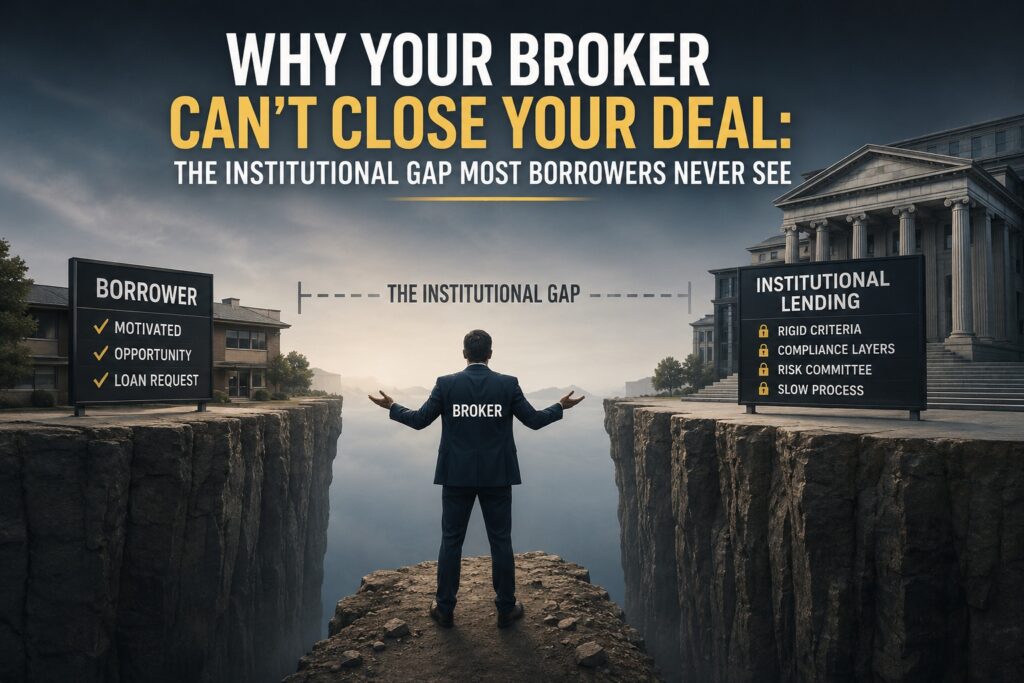
A commercial real estate deal that keeps stalling often feels like a lender problem or a broker problem. In reality, most stalled mandates trace back to one weak point: the financing strategy was never truly ready for a credit committee.
When a deal will not close, the real reasons sit upstream. The capital stack does not match lender appetite, the documentation feels thin, or the projections look more like hope than underwriting. The first change is not swapping brokers. The first change is stepping back and rebuilding the strategy that shapes structure, numbers, and lender targeting.
This article walks through why deals really fall apart, what a genuine deal‑closing strategy looks like, the five mistakes that quietly kill mandates, and how Equis Capital Finance treats strategy before any file reaches a lender. If a deal is stuck, the next pages help you see what to fix first.
Key Takeaways
- Most commercial mandates fail because the financing strategy is weak, not because the broker is lazy or unconnected. Lenders react to thin files and confused structures long before they react to personalities. When you fix structure and documentation, the same broker often gets a different answer.
- A real deal‑closing strategy follows a sequence that puts lenders last, not first. You shape the capital stack, build institutional‑grade documents, and only then pick a short list of lenders. That sequence mirrors how credit teams at banks and pension funds actually think.
- The same five strategic mistakes repeat across sponsors and business owners: incomplete files, misaligned capital stacks, weak projections, broad deal blasts, and reputational damage. Spotting those patterns early gives you a practical checklist before you send any mandate out.
- Equis Capital Finance works as a capital markets advisor that owns outcomes, not as a volume brokerage that just forwards files. By applying lender‑side thinking and tools like Project Navigator™, the firm helps clients repair strategy before lenders ever see the deal.
Why Most Deals Fall Through Before A Lender Even Decides

Most commercial deals fall through before lenders make a formal decision because the financing strategy reaches them half built. Credit teams at banks and private lenders react to the structure and documentation in front of them, not the sponsor’s enthusiasm. When the file is not lender‑ready, the quiet answer is usually no.
In practice, many sponsors contact several brokers the moment a term sheet is needed. Those brokers rush a teaser, a light spreadsheet, and some marketing slides to a long list of lenders such as RBC, TD Bank, and regional credit unions. From the lender’s side, that looks like a sponsor testing the market without doing real homework.
According to Statistics Canada, roughly one in five Canadian small and medium‑sized firms that look for external financing are turned down or only partially approved. Lenders often point to incomplete files, unclear business plans, and weak numbers as recurring reasons. That rejection rate shows how often deals reach lenders before they are genuinely ready.
The deeper issue is misalignment between the ask and lender risk appetite. Common examples include:
- Requested loan size that does not match the risk profile of the asset
- Debt service coverage that only works at the current rent roll, with no buffer for vacancies or interest rate moves from the Bank of Canada
- A sponsor track record that does not support the complexity of the proposed construction, redevelopment, or acquisition
“We don’t decline people; we decline files that don’t give us enough to work with.”
— Senior credit officer at a Canadian commercial lender
When you see a decline as a broker failure, you miss the real lesson. The lesson is that the deal hit someone’s desk before the capital stack, risk story, and documentation could stand on their own. Fixing that pattern is the fastest way to change lender responses on the next mandate.
What A Real Deal‑Closing Strategy Actually Looks Like

A real deal‑closing strategy in commercial financing is a step‑by‑step plan that shapes structure, paperwork, and lender outreach before anyone hits send on an email. It turns a raw project idea into something a credit committee at a bank, insurance company, or pension fund can approve. Without that plan, even strong assets get lost in the pile.
At its core, this kind of strategy answers four hard questions — an approach supported by research on how to strategically orchestrate the Mastering the marketing mix of capital, documentation, and lender targeting:
- What capital structure fits the asset and sponsor?
- What evidence will a lender need to trust the numbers?
- Which lenders actually finance this type of risk?
- How will the deal be presented in their language, not yours?
Those answers turn a vague goal into a bankable path.
A practical framework looks like this:
- Define The Capital Structure That Fits The Deal
Decide how much senior debt, mezzanine debt, and equity the project can truly support — a process that benefits from Recommending Actionable Strategies: A semantic approach to integrating analytical frameworks with decision heuristics when evaluating capital structure options. That means checking net operating income, interest coverage, and exit plans under different rate and rent scenarios. Sponsors who rush past this step often ask for debt levels that CMHC, banks, or private lenders simply will not provide. - Build Institutional‑Grade Documentation
Instead of a sales deck, prepare a credit memorandum that reads like something an internal bank team would write. It should describe the asset, sponsor history, market context, and risks in a clear, balanced way. Detailed cash flow models back every claim, with stress tests that show what happens if costs rise, rents slip, or absorption slows. - Map The Right Lenders For This Mandate
Not every lender funds construction, pre‑stabilized assets, or cross‑border cash flows. A good strategy uses current knowledge of banks, trust companies, and private funds to create a focused target list. That map saves time and protects your name by avoiding obvious mismatches. - Engage Lenders With A Clear Process And Timeline
Only after structure and documents are ready do you reach out — a sequencing principle consistent with how StrategyLLM: Large Language Models research demonstrates that strategy must be generated and validated before execution begins. You explain the ask, the time frame, and the decision path upfront, so credit teams at institutions like BDC or large credit unions know exactly what they are reviewing. That level of clarity invites real underwriting instead of reflex declines.
As investor Warren Buffett once said,
“It’s only when the tide goes out that you discover who’s been swimming naked.”
Stress‑testing your financing strategy before lenders do it for you is how you avoid that situation.
When sponsors own this full sequence, the role of any broker or advisor becomes much more effective. The mandate feels organised, lender questions are easier to answer, and the odds of a clean closing rise sharply.
The Five Strategic Mistakes That Kill Deals Before They Start

Across commercial real estate and mid‑market business financing, deals killed before lenders appear again and again. They show up in office towers, retail plazas, industrial properties, and corporate transactions of many sizes. If your deal is stuck, it almost certainly suffers from at least one of these.
- Mistake 1: Incomplete And Poorly Packaged Financing Files
Many sponsors send thin spreadsheets, glossy marketing brochures, and a brief email hoping lenders will “take a look.” To a credit analyst at a bank or a private debt fund, that signals weak discipline and limited preparation. The usual result is a polite decline, lower proceeds, or pricing that reflects the extra work and uncertainty. - Mistake 2: A Misaligned Capital Stack
When senior debt, mezzanine capital, and equity do not do not line up with lender risk appetite, the gaps show up in committee. Examples include unrealistically high loan‑to‑cost targets for construction or equity that does not absorb enough first‑loss risk. Credit teams then see a structure that fails their policy tests, even if the underlying asset has promise. - Mistake 3: Confusing Contact Lists With Committed Capital
A long list of emails for lenders and funds is not the same as real capacity to fund your specific mandate. Some brokers blast weak files to dozens of institutions, hoping something sticks. Those mass sends waste lender time and quietly erode both the sponsor’s name and the broker’s standing. - Mistake 4: Weak Financial Projections And Rushed Due Diligence
Forecasts that assume perfect lease‑up, flat interest rates, and no cost overruns rarely survive real underwriting. When a credit committee at a major bank reviews that model, every aggressive assumption becomes a reason to say no or to tighten terms. Sponsors also hurt themselves when they skip independent reports, market studies, or proper construction budgets. - Mistake 5: Compounding Reputational Damage
Every failed or withdrawn application leaves a small mark in lender files. Over time, banks and private lenders apply closer scrutiny and tougher conditions to sponsors with a pattern of weak execution. As Statistics Canada data shows, about one in five Canadian SMEs seeking financing are declined or only partially approved, and repeated issues with structure and documentation sit behind many of those numbers.
Once you start seeing these mistakes as strategy problems, not people problems, the path forward changes. Instead of calling a new broker, you rework the file so that any experienced intermediary has something truly fundable to champion.
How Equis Capital Finance Approaches Strategy Before A File Reaches A Lender

Equis Capital Finance treats every mandate as a strategy problem long before it becomes a lender problem. The firm operates as a boutique capital markets advisory practice, not a high‑volume mortgage shop. That means the focus is on building a fundable structure, then matching it to the right institutions across Canada and the United States.
With more than twenty years of commercial experience, the principals at Equis Capital Finance speak regularly with credit teams inside banks, pension funds, insurance companies, trust companies, and private lenders. Those conversations keep them current on real appetites, limits, and hot buttons. When a sponsor brings a construction, acquisition, or recapitalisation file, the advice is shaped by what those credit teams are actually approving.
Every engagement starts with deal readiness. Equis Capital Finance prepares investor‑grade credit memorandums, full cash flow models, and risk analysis that would feel familiar inside a bank like Scotiabank or CIBC. Projections are stress‑tested across rent scenarios, interest rate shocks, and timing delays, so weak assumptions surface early. Where needed, the capital stack is redesigned to balance senior debt, bridge financing, mezzanine facilities, and equity in a way that can pass underwriting.
From there, the firm uses its Project Navigator™ tool to review the transaction and map a focused lender list. That map might include chartered banks, credit unions, non‑bank lenders, and family offices that have shown interest in similar mandates. The tool also outlines a realistic path from proposal to closing, including likely conditions and milestones.
For sponsors and business owners, this advisory approach means they are not just paying for introductions. They are paying for lender‑side thinking that repairs strategy at the source. The same asset, once packaged and structured through this process, often receives a very different reception from the market.
The Bottom Line

When a commercial real estate or corporate financing deal does not close, the broker is usually not the real problem. The deeper issue is a financing strategy that reaches lenders before it is fully formed. That gap shows up in shaky numbers, awkward capital stacks, and files that feel more like marketing than risk analysis.
The framework that changes outcomes is simple but demanding:
- Structure the capital stack so that senior debt, mezzanine capital, and equity each make sense for the asset and sponsor.
- Build institutional‑grade documentation and credible projections.
- Create a targeted lender list and only after that stage, begin conversations.
For sponsors, developers, and business owners, the question is not which broker to call next. The better question is whether the current strategy could pass the same tests an internal bank team would apply. Equis Capital Finance exists to help clients answer that question honestly, repair weak points, and send only lender‑ready deals into the market.
Frequently Asked Questions
Question: What Is A Deal‑Closing Strategy In Commercial Financing?
Answer: A deal‑closing strategy in commercial financing is a step‑by‑step plan that shapes capital structure, documentation, and lender outreach before any submission. It turns a project into a package that a credit committee can review, stress‑test, and approve without chasing missing information.
Question: Why Do Commercial Real Estate Deals Fall Through At The Lender Stage?
Answer: Commercial real estate deals usually fall through because files reach lenders incomplete or misaligned with policy. Thin documentation, unrealistic projections, and capital stacks that ignore lender risk limits all create friction. When those issues stack up, committees at banks and private lenders choose to decline or cut proceeds.
Question: What Is The Difference Between A Capital Markets Advisor And A Mortgage Broker?
Answer: A capital markets advisor designs and manages the full financing strategy, from structure and modelling to lender targeting and negotiations. A traditional mortgage broker tends to focus on forwarding existing files to lenders. Equis Capital Finance works in the first category, owning the outcome rather than just passing along documents.
Question: How Does A Misaligned Capital Stack Prevent A Deal From Closing?
Answer: A misaligned capital stack prevents closing because each layer fails its own risk test. Senior lenders may see debt that is too high for policy, while mezzanine investors may see too little return for the risk. When no layer feels comfortable, the combined structure collapses in committee.
Question: What Does “Institutional‑Grade Documentation” Mean For A Financing File?
Answer: Institutional‑grade documentation means a complete, logical package that answers lender questions before they ask them. It includes a clear credit memorandum, detailed cash flow models, independent reports, and stress‑tested projections. The tone is balanced and factual, closer to an internal bank memo than a marketing slide deck.
Question: What Is Equis Capital Finance’s Project Navigator™?
Answer: Project Navigator™ is Equis Capital Finance’s pre‑engagement review and mapping tool. It looks at the transaction, tests deal readiness, and identifies lenders that fit the risk profile and size. By outlining a realistic path from proposal to closing, it helps sponsors decide whether to refine the strategy further before approaching the market.